Exercise 3.2

Do you think art is and will remain a distinct category or is it best seen as a species of visual culture? List reasons for and against a distinct category. How many ways could ‘best seen as’ be understood? Aesthetically, morally, socially?

In order to answer this question I needed to define and clarify various terms that have been used. The first definition is that of ‘art’ (or visual art). The Encyclopedia Britannica gives a definition of ‘(visual) art’ as:

‘..a visual object or experience consciously created through an expression of skill or imagination. The term art encompasses diverse media such as painting, sculpture, printmaking, drawing, decorative arts, photography and installation.’ (Encyclopedia Britannica)

and Lexico online defines art as:

‘The expression or application of human creative skill and imagination, typically in a visual form such as painting or sculpture, producing works to be appreciated primarily for their beauty or emotional power.’

Image result for art sculpture
Fig 1. example of visual art: Hepworth, B. (1946) Pelagos [Elm and strings on oak base] Musée Rodin (Paris, France) At https://www.tate.org.uk/art/artworks/hepworth-pelagos-t00699 (Accessed 09/02/2020)

Visual culture can be defined as ‘the study of the cultural construction of visual experience.’ (Mitchell 1995:540) Disciplines such as art history, media studies, philosophy and politics converge in the study of visual culture to find new ways of looking at the visual world. Hunter describes visual culture as;

‘a term that refers to the tangible, or visible, expressions by a people, a state or a civilization, and collectively describes the characteristics of that body as a whole.’ (Hunter S.D cited in Schleimer 2008)

Visual culture has emerged as a field of study in post-modern society largely due to the development and usage of visual technology. The visual world is now saturated – social media, film, television the arts… . All these can be seen as a ‘species’ of visual culture and can be studied as a reflection of social reality.

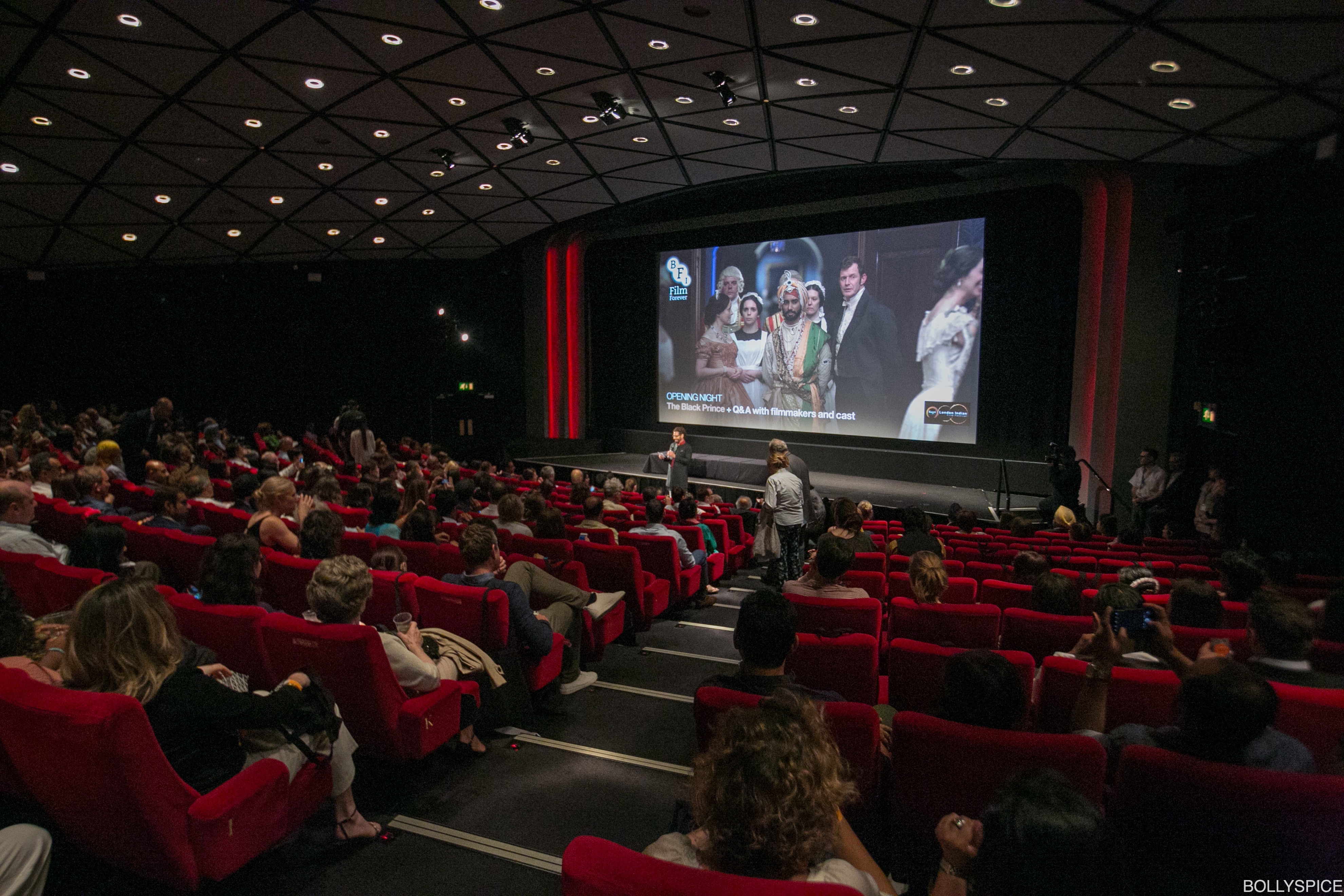
Image result for tablet showing images
Fig 2. Example of visual media.Apple ipad mini (2019) At https://uk.pcmag.com/tablets/10395/the-best-tablets-for-2020 (Accessed 09/02/2020
Image result for cinema
Fig 3. Example of visual culture. London Indian film Festival At https://bollyspice.com/london-indian-film-festival-opening-night-the-black-prince/(Accessed 09/02/2020)

Art in today’s world is not just viewed in a gallery or in a collectors house. All the other media of visual culture (magazines, internet pages, books, television) have the ability to bring that world into peoples homes (albeit second-hand) as part of mass culture. For example one can just as easily flick from one channel showing a science-fiction classic to a documentary on Monet.

Art has always traditionally been an independent discipline but in contemporary culture with multiple forms media is it now best seen as a species of visual culture?

Art Remaining a distinct category

  • Humanity has a long history of art and this needs to be seen as separate from other visual medium that may be short-lived/temporary. The oldest known art object ‘the Venus of Tan Tan’ was believed to have been made between 300,000 and 500,000 years ago (Morris 2013:64). Film, internet, and modern visual media have only been in existence for a mere fraction of that.
  • Art is ‘the expression or application of human creative skill and imagination’ (Lexico online, accessed 08/02/20) and often does not need to serve a purpose – art for art’s sake! If it was seen a species of visual culture it might lose its autonomy.
  • Academically, art remaining a distinct category maintains specialist learning and expertise.

Art as a ‘species’ of Visual Culture

  • Holistic understanding of subjects and issues within society and visual culture allow new ways of thinking/creating.
  • A deeper/wider and perhaps more realistic approach to the visual arts that is able to reflect life in a more ‘honest’ way.
  • The study of visual experience through art and other mediums can help to understand how reality is socially constructed and not necessarily a ‘given’.
  • Art as well as other visual media is created by individuals who are part of a socially constructed society and will therefore reflect that culture within their art.
  • The lines between types of visual media can become blurred. Artists are now combining new technology such as computers and film within their creative process or displaying art on visual media. Visual media such as television and magazines can show images of art meaning it doesn’t have to be seen in a gallery.

It would appear that there are merits to both sides of this argument. It is important for art to remain a distinct category to ensure that specialised, focused and in-depth creativity and research occurs. However, as art is a part of the visual culture that we experience today it also should be encompassed into that category to create new ways of understanding. I believe that in the future it will remain its own category alongside being a ‘species’ of visual culture.

How many ways could ‘best seen as’ be understood? Aesthetically, morally, socially?

‘Best seen’ can be understood in different ways. Art is ‘best seen’ as aesthetically, morally, culturally, socially, philosophically, anthropologically and historically as a species of Visual Culture.

Reflections

This was a really tough exercise for me. I had to read and re-read the question to try and understand how to answer the question. I initially took the question to mean whether the study of art should be a single discipline or whether it is best as part of the interdisciplinary studies of Visual Culture. After completing the exercise I became concerned that I had misinterpreted the question and tackled it again.

List of illustrations

Fig 1. example of visual art: Hepworth, B. (1946) Pelagos [Elm and strings on oak base] Musée Rodin (Paris, France) At https://www.tate.org.uk/art/artworks/hepworth-pelagos-t00699 (Accessed 09/02/2020)

Fig 2. Example of visual media.Apple ipad mini (2019) At https://uk.pcmag.com/tablets/10395/the-best-tablets-for-2020 (Accessed 09/02/2020

Fig 3. Example of visual culture. London Indian film Festival At https://bollyspice.com/london-indian-film-festival-opening-night-the-black-prince/(Accessed 09/02/2020)

Bibliography

Glodd, B. (2016) The 5 Significant Advantages of Interdisciplinary Research Institute for Humane Studies at George Mason university 9.11.2016 At https://theihs.org/blog/5-advantages-of-interdisciplinary-research/ (Accessed 08/02/2020)

https://en.wikipedia.org/wiki/Visual_culture (Accessed 08/02/2020)

https://www.britannica.com/search?query=art (Accessed 08/02/2020)

https://www.lexico.com/en/definition/art (Accessed 08/02/2020)

Mirzoeff, N.(1999) An Introduction to Visual Culture New York: Routledge

Mitchell, W.J.T (1995) Interdisciplinarity and Visual Culture Art Bulletin 12/1995 Vol. 77 No.4 At https://monoskop.org/File:Mitchell_WJT_1995_Interdisciplinarity_and_Visual_Culture.pdf (Accessed 08/02/2020)

Morris, D. (2013) The Artistic Ape,Red Lemon Press Ltd: London

Schleimer, L. (2008) Art in Antiquity -visual culture at https://www.brown.edu/Departments/Joukowsky_Institute/courses/artinantiquity/7158.html (Accessed 09/02/2020)

Exercise 2.4

For a picture of your own choice say how the image indicates a point of view for the spectator and say why you think the effect is rare in the cinema but common in photography. Does the painting or photograph represent eye-contact between someone in the picture and ourselves. What films have you seen where characters treat the camera as another person?

Before answering the question above, I wanted to ensure that I fully understood the term ‘scopic regimes’. Formulated by Martin Jay in 1988, the term ‘scopic regime’ is derived from a term used by the cinematologist Christian Metz who wished to compare how we behave in the cinema and in the theatre. According to Sendyka (2013) ‘he is interested in two factors: the distance of the spectator from the object and the very existence of that object vis-à-vis the spectator.’ He refers to visual acts imposed on the viewer, for example the institution, its machinery, its space, its presentation, external perceptual conditions and scopophilia.

Martin Jay developed the idea of Scopic regimes in his 1988 article Scopic regimes and Modernity. Roma Sendyka (2013) explains that:

‘It is therefore not only the act of seeing that is important, but also the system of dependence between the donor and the recipient of the look. The frame of that action also matters: scopic regime is a type of visuality but a ”culturally specific” one. In Jay’s view a scopic regime is a set of visual conventions determining our action of seeing: how and what we see. In other words it is dominant ways of seeing and organising visual culture. In determining the relation between the spectator and the viewed, scopic regimes are the basis of the distinguishing of an object, in this way becoming the basis of the distinction of what is knowable. ‘ (Sendyka,2013:104)

Scopic regimes determine the relation between the spectator and the viewer. Jay argues that vision becomes more dominant in the modern age due to technological advancements (tv, cinema, computers, photography etc. This is modernity’s scopic regime.

I decided to choose a photograph to examine the spectators point of view and found an interesting Paul Strand photo of three children looking through a closed cottage window in the Hebrides during the 1950’s.

Fig 1. Strand, P. (1954) Milly, John and Jean MacLellan, South Uist, Hebrides [photograph] At Dickson, A . (2016) The New Yorker : Paul Strand’s Sense of Things https://www.newyorker.com/culture/photo-booth/paul-strands-sense-of-things Accessed 08/12/2019

This photo indicates the spectator’s point of view very clearly. We (through the photographer’s lens) are placed directly at eye level with the children although we are distinctly separated by the window frame. We are outside whilst the children are peeping through the glass and from behind the curtain to see what is happening. The child in the centre is looking at the camera with confident curiosity, yet the other two look a little uncertain. The photo captures a gentle, homely real life moment in time- one that we can spend time with.

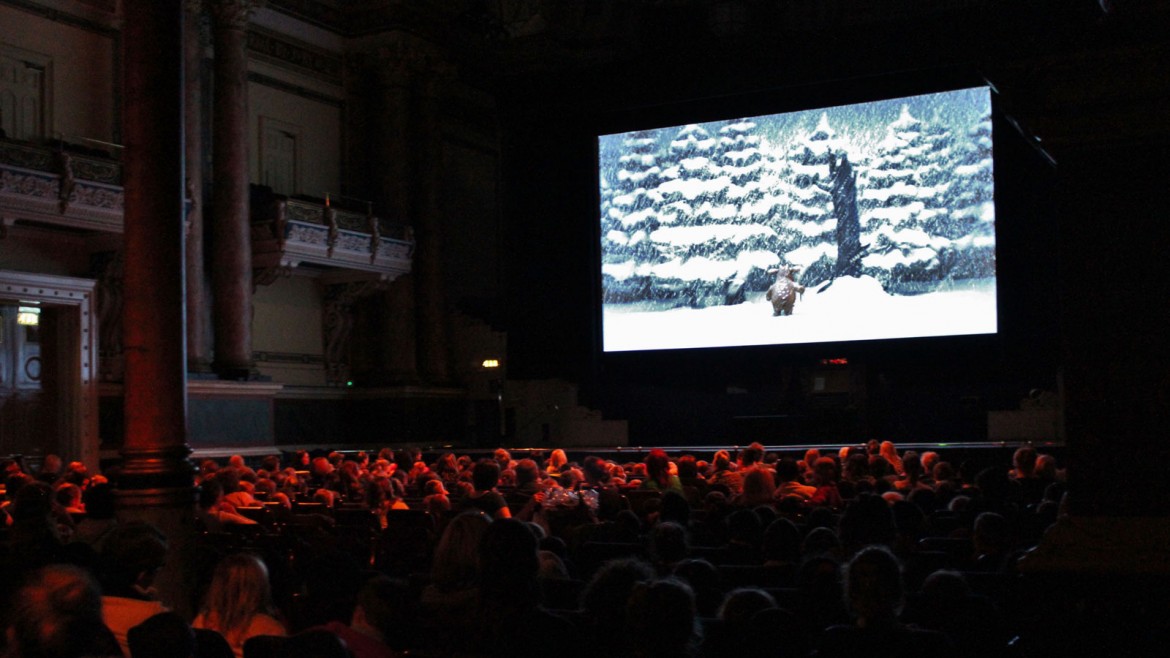
If we compare this to the view point of a spectator of a film in a cinema, it is quite a different experience. The spectator is anonymous and will be sitting in a dark setting amongst many other people. Instead of a static scene with one viewpoint, the spectators viewpoint is constantly changing as the film is edited to keep the viewers attention. Scenes change and viewpoints alter as the cameras move over the film’s duration.

Image result for picture of a full cinema
Fig 2. Inside the cinema [photograph] At https://www.intofilm.org/films/filmlist/38 Accessed 08/12/2019

In the Strand photo, the three children are directly making eye-contact with the spectator. This is common in photography because there is often a tendency for people in real life to pose for a photograph by looking down the lens of the camera. In the cinema the characters on the screen do not look directly at the camera/spectator. In film, apart from documentaries, we are observing a narrative played out before us and if the characters were to look at us it would shatter this illusion.

Of course there are exceptions to this rule! There are several films I have seen where the characters treat the camera as another person. This has been termed ‘breaking the fourth wall’. This imaginary wall keeps the actors from the audience. Rodriguez and Strassberg (2014) state that this might be achieved ‘through characters expressing inner thoughts, acknowledging they’re in a film, or venting to the camera (and in turn, the audience)’. This can be seen as an avant-garde technique or done for comedic value.

In the film ‘Ferris Bueller’s day off’ directed by John Hughes, the main character Ferris (played by Matthew Broderick) breaks the fourth wall by regularly speaking to the camera (audience) as if they were one of his friends. Ferris creates an intimacy with the audience as we are pulled out of anonymity and invited into his experience. This enhances the comedic value of the film as we follow his adventure through one day.

Image result for ferris bueller
Fig 3. Matthew Broderick in Ferris Bueller’s day off (1986) [Film still] At https://www.slashfilm.com/ferris-buellers-day-off-soundtrack/ Accessed 09/12/2019

The 1947 film ‘Lady in the Lake (dir: robert Montgomery), creates a slightly different experience for the viewer when breaking the fourth wall.

http://img36.imageshack.us/img36/1112/clipboard0329.png
Fig 4. Lady in the Lake (1947) [film still] At https://worldscinema.org/2012/03/robert-montgomery-lady-in-the-lake-1947/ Accessed 09/12/2019

The relationship between the characters and the audience is formed as the audience becomes the Private investigator Phillipe Marlowe (played by the films director). Apart from a couple of times when Marlowe is visible narrating to the audience, the audience see the story played out as though they were Marlowe himself. The other characters address the audience as though they were him by looking directly at the camera.

Reflections

It was interesting to reflect upon contemporary technology and how this effects the point of view for the spectator. Modern society is now dominated by mobile phones and tablets. With the invention of mobile phone camera technology and the ‘selfie’ we see a blurring of subject(object) and viewer as individuals now take on both roles.

List of Illustrations

Fig 1. Strand, P. (1954) Milly, John and Jean MacLellan, South Uist, Hebrides [photograph] At Dickson, A . (2016) The New Yorker : Paul S’s Sense of Things https://www.newyorker.com/culture/photo-booth/paul-strands-sense-of-things Accessed 08/12/2019

Fig 2. Inside the cinema [photograph] At https://www.intofilm.org/films/filmlist/38 Accessed 08/12/2019

Fig 3. Matthew Broderick in Ferris Bueller’s day off (1986) [Film still] At https://www.slashfilm.com/ferris-buellers-day-off-soundtrack/ Accessed 09/12/2019

Fig 4. Lady in the Lake (1947) [film still] At https://worldscinema.org/2012/03/robert-montgomery-lady-in-the-lake-1947/ Accessed 09/12/2019

Bibliography

Dickson, A . (2016) Paul Strand’s Sense of Things : The New Yorker 15/04/2016 https://www.newyorker.com/culture/photo-booth/paul-strands-sense-of-things Accessed 08/12/2019

Rodriguez, B & Strassberg, R. (2014) 14 Films That Famously Break the Fourth Wall in Backstage. 24/04/2014 At https://www.backstage.com/magazine/article/films-famously-break-fourth-wall-12051/ Accessed 09/12/2019

Sendyka, R. (2013) Scopic Regimes and Modernity:Hypotyposis in Koczanowicz D. et al (2013) Discussing Modernity, a dialogue with Martin Jay. Amsterdam:Rodopi At https://www.researchgate.net/publication/334805533_SCOPIC_REGIMES_AND_MODERNITY_HYPOTYPOSIS Accessed 12/12/2019

Exercise 2.3

What would count as examples of ‘utter flatness’. List five things an artist might do to exploit the idea. In other words what kind of things might one put on a gallery wall that could pass for an abstract or figurative painting but also reveal themselves to be everyday objects?

In Greenberg’s essay ‘Modernist painting’ (1961), he argued that modern disciplines became more competent by criticising themselves. Disciplines needed to distinguish themselves from each other and this was achieved through self- criticism.

The purity and uniqueness of painting was that it was the only art form to use a flat surface. Modernist painting orientated itself towards emphasising flatness. The tradition of creating an illusion of real life through representation was not attempted, instead artists attempted to draw attention to the fact that viewers were looking at paint on a flat canvas surface. As Greenberg suggested, this flatness could never be a literal flatness but more of an optical flatness.

So, how could an artist exploit the idea of ‘utter flatness’? I will list 5 ways that I have discovered that artists have used and provide examples to show how this has been achieved. In my research, I discovered many methods to exploit ‘utter flatness’ used by artists produced pure abstraction. In relation to the research question I shall highlight instances where artists have created works ‘that could pass for an abstract or figurative painting but also reveal themselves to be everyday objects.’

1.VISIBLE PROCESS

An artist might produce a ‘flat’ painting by displaying to the viewer how the paint has been applied to the canvas. The viewer is aware that paint has been applied to a flat surface and brush/stick/trowel strokes are visible creating texture. Perhaps the most obvious example of being able to see the process of paint applied to a flat surface is in the art of Jackson Pollock.

Number 1, 1948 by Jackson Pollock
Fig 1. Pollock, J (1948) Number 1 [Enamel, Matt and Gloss on Canvas] At https://www.jackson-pollock.org/number-1.jsp#prettyPhoto[image1]/0/ Accessed 03/12/2019

Pollock was an Abstract Expressionist painter who used action and gestures to create his paintings. Jackson removed his canvas from the wall, placed it on the floor and dripped, splattered or dragged paint with sticks in curved non-geometric forms. The paint often hit the canvas from a distance layering string like patterns. In this purely abstract piece of art we are in no doubt that we are looking at paint on a flat surface and that it has been applied with the physical energy and expression of the artist.

2. MASS BLOCKS OF COLOUR

Artists may exploit the idea of ‘utter flatness’ in painting through the use of colour and in particular mass blocks of colour. Still, flat, 2D, stable shapes destroy the illusion of the canvas as a visual window and emphasise its surface. The best example of this can be seen in the art of Abstract Expressionist Mark Rothko.

Mark Rothko, ‘Red on Maroon’ 1959
Fig 2. Rothko, M. (1959) Red on Maroon [Oil on Canvas] At https://www.tate.org.uk/art/artists/mark-rothko-1875 Accessed 03/12/2019

Rothko does not attempt visual representation in his paintings but instead using colour to convey emotional states. Unlike Pollock, Rothko creates flatness by painting still, hazy blocks of pure colour that appear to float on the canvas.

3. DECONSTRUCTING FORM

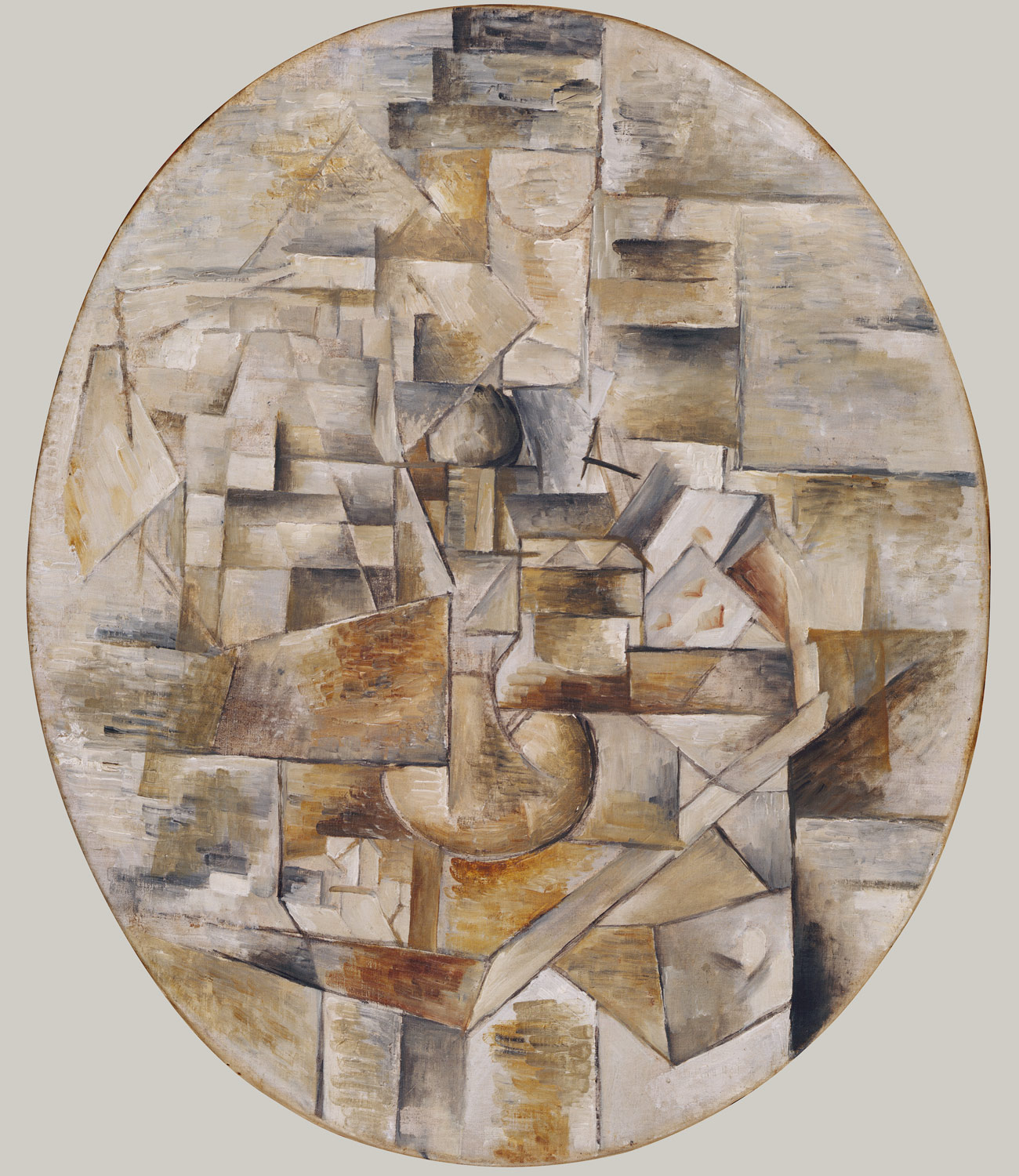
During the early 20th Century artists such as Picasso and Braque developed ‘Cubism’. This style of representing reality broke objects or figures down into distinct planes that showed multiple viewpoints at the same time within the same space. This effect emphasised the flatness of the canvas instead of creating an illusion of depth.

Candlestick and Playing Cards on a Table, 
				ArtistGeorges Braque,Paintings
Fig 3. Braque, G. (1910) Candlestick and playing cards on a table. [Oil on Canva] At https://www.metmuseum.org/toah/works-of-art/1997.149.12/ Accessed 04/12/2019

On first view, Candlestick and playing cards on a table (Braque) looks like a purely flat abstract painting. However, only after reading the title of the painting and looking closer can we start to identify the objects. The candlestick and the table appear fragmented and displayed from multiple viewpoints which creates ‘flatness’ in the painting.

4. SIMPLIFY

To exploit the ‘flatness’ of the canvas, artists could simplify their paintings using simple, geometrical shapes and/or lines using pure colour. The best example’s of paintings that use this method can be found in the minimalist movement. In the 1960’s artist Frank Stella took the idea of emphasising flatness to the extreme.

Image result for stella zambezi
Fig 4. Stella, F. (1959) Zambezi [enamel on canvas] At https://www.sfmoma.org/artwork/2001.542/ Accessed 04/12/2019

In Zambezi, Stella creates an expressionless, symmetrical, geometrical pattern using clean black and white lines. The design emphasises the fact that we are looking at a flat canvas by emphasising the corners and the centre of the rectangle. The gaps between the white stripes (black areas) are of a width that suggests the depth of the canvas and perhaps its distance from the wall (Anderson, 2011).

We can also look at the work of Paul Klee to give examples of how simplification can emphasise the flatness of the canvas. In Castle and Sun, Klee represents real objects through the placement of simple geometric forms.

Castle-and-Sun-by-Paul-Klee
Fig 5. Klee, P. (1928) Castle and Sun [Oil on Canvas] At http://totallyhistory.com/castle-and-sun/ Accessed 04/12/2019

Blocks of pure coloured squares, triangles, rectangles and circles create a mosaic effect. Unlike Stella whose minimalist style is purely patterns, Klee creates a subtle representation of a castle with the sun overhead.

5. EXPLOIT THE SHAPE OF THE CANVAS

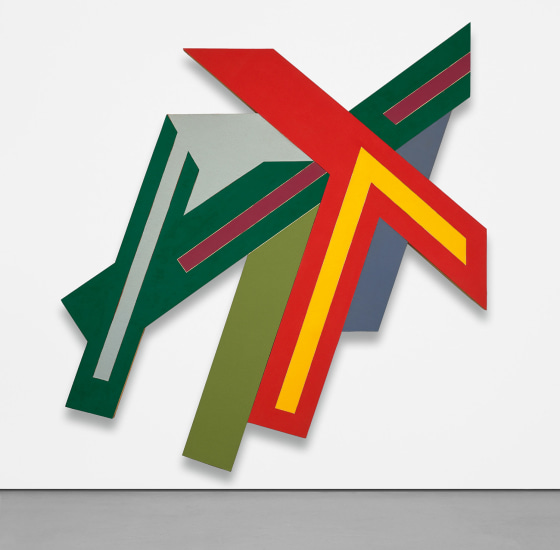
The canvas has a large part to play in creating an optical flatness. Firstly, we can argue that artists can draw attention to the canvas as a flat surface by creating an infinite space that does not have to have a central focal point ( See Fig 1. and Fig 4.). Secondly, Andrew (2012) points out that traditionally artists have the canvas representing a window shape so that we, as viewers, look through it at an 3D image that creates an illusion of representational reality. Artists can break this window effect by altering the shape of the canvas.

Narowla II
Fig 5. Stella, F. (1971) Narowla II [ acrylic, felt, canvas and paper collage on panel] At https://www.phillips.com/detail/frank-stella/NY010619/54 Accessed 04/12/2019

Finally, artists can draw the viewers attention to the rectangular shape of the canvas and it’s flat surface by defining its shape.

Fig 6. Hodgkin H. (1979-1984) Clean Sheets [Oil on wood] At https://www.tate.org.uk/art/artworks/hodgkin-clean-sheets-t06550 Accessed 04/12/2019

In many of Hodgkin’s paintings he emphasises the contours of his abstract paintings. We are in no doubt that we are looking at a flat surface. Rothko also emphasises the contours of the canvas using blocks of shape and horizontal and vertical lines (see Fig 2.)

Reflections

I found this exercise fascinating and enjoyed learning about different movements when undertaking my research. I especially found a series of lectures by Jonathon Andrews very informative as they explored Greenberg’s theories in relation to various art movements. When viewing Modern Art, Andrews advises us to ask the question ‘What does it mean to do this?’ Rather than ‘What does it mean/ What is this picture about?’ which I have now taken under my belt!

List of Illustrations

Fig 1. Pollock, J (1948) Number 1 [Enamel, Matt and Gloss on Canvas] At https://www.jackson-pollock.org/number-1.jsp#prettyPhoto[image1]/0/ Accessed 03/12/2019

Fig 2. Rothko, M. (1959) Red on Maroon [Oil on Canvas] At https://www.tate.org.uk/art/artists/mark-rothko-1875 Accessed 03/12/2019

Fig 3. Braque, G. (1910) Candlestick and playing cards on a table. [Oil on Canva] At https://www.metmuseum.org/toah/works-of-art/1997.149.12/ Accessed 04/12/2019

Fig 4. Stella, F. (1959) Zambezi [enamel on canvas] At https://www.sfmoma.org/artwork/2001.542/ Accessed 04/12/2019

Fig 5. Stella, F. (1971) Narowla II [ acrylic, felt, canvas and paper collage on panel] At https://www.phillips.com/detail/frank-stella/NY010619/54 Accessed 04/12/2019

Fig 6. Hodgkin H. (1979-1984) Clean Sheets [Oil on wood] At https://www.tate.org.uk/art/artworks/hodgkin-clean-sheets-t06550 Accessed 04/12/2019

Bibliography

Anderson, J. (2012) The (spiritual) crisis of Abstract Expressionism: Mark Rothko. [online lecture] At https://www.youtube.com/watch?v=3V1SLKsF0BE Accessed 02/12/2019

Anderson, J. (2012) Postmodern Strategies: The Canvas as an Arena: Jackson Pollock [online lecture]. At https://www.youtube.com/watch?v=k7fodAy0jbU Accessed 02/12/2019

Anderson, J. (2011) The Fully Present Object: Minimalism – Jon Anderson [online lecture]. At https://www.youtube.com/watch?v=RogfryPVWDk Accessed 02/12/2019

Greenberg. C. (1961) Modernist Painting Forum Lectures (Washington, D. C.: Voice of America), 1960. Viewed at http://www.yorku.ca/yamlau/readings/greenberg_modernistPainting.pdf

Joselit, D. (2000) Notes on Surface, Towards a Genealogy of Flatness in Kocur, Z. and Leung, S. (2012) Theory in Contemporary Art since 1985, 2nd Edition. Chichester:John Wiley & Sons, Inc. p102-117

Masterpieces of Jackson Pollock, Number 1, 1948.  Viewed at https://www.jackson-pollock.org/number-1.jsp Accessed 03/12/2019

Tate Art Term – Cubism At https://www.tate.org.uk/art/art-terms/c/cubism Accessed 04/12/2019

Wolf, J. Introduction to Flatness at The Art Story. Viewed at https://www.theartstory.org/definition/flatness/ Accessed 03/12/2019

Olafur Eliasson :The Design of Art

After becoming interested in Eliasson’s art after visiting his 2019 exhibition at the Tate (See Exhibitions and research), I discovered an episode in the series Abstract the art of Design (Netflix, 2019) where he talks about his creativity. It was fascinating to listen to him discuss his life, his inspiration and the way he creates and develops his ideas. Nature and spectator are important to Eliasson and I especially like his awareness and sensitivity to current global issues such as global warming. I felt as though I really connected to the artist who allowed an intimate view of his creative process.

During my Assignment 1 feedback, my tutor mentioned using sketchbooks to develop ideas. I currently just use my sketchbook to do quick sketches but thought I might try to keep notes and inspiration in them. I have therefore made notes about Eliasson in my sketchbook with short words and phrases that might help inspire me in the future.

Image preview
Notes from authors sketchbook (10/11/2019)
Image preview
Notes from authors sketchbook (10/11/2019)

Bibliography

Abstract, The Art of Design. Olafur Eliasson: The Design of Art. Series 2 Episode 1 [Television Programme] Netflix 2019 (Accessed 19/11/2019)

Exercise 1.1

Fig 1. Ernst, M. (1943) The eye of Silence. [Oil on canvas] In Belshaw, M. (2016)OCA Visual Studies 1 [photograph] in possession of the author.

Max Ernst painted ‘ The Eye of Silence’ using a technique called ‘decalcomania’. This method involves the pressing of paint onto a canvas with an item such as cardboard or glass. The chance patterns and images made using this technique were supposed to free the artist and ‘liberate the unconscious’ (Sabine Eckman,2008). Ernst brings geological forms to life as they twist and take on a sculptural life-like appearance. Shapes that resemble eyes are encased in this pale green sculpture creating an ‘other- world’ type atmosphere.

The only intentional face I could distinguish in Max Ernst’s ‘The eye of silence’ (1943) is the face of the female figure at the bottom right corner of the painting who appears to be lounging on some rocks by the edge of a lake. Her facial features are in proportion and are indicated through the use of shadow. Her body is also in proportion and seems to be lying in a leisurely, relaxed position. She has some sort of foliage or natural material encompassing her head and upper torso that makes her appear magical or mystical. The fact that her skin is a pale blue allows her to stand out from her surroundings and almost mirror the sky.

There are many unintentional faces that Ernst has emphasised in this unusual landscape. They are disproportionate and distorted giving them a surreal and eerie presence. Facial features such as an eye or mouth seem to emerge from the rocky landscape. The most ambiguous face of all is the one reflecting in the water next to the woman. It looks to me like a side on face with sunglasses! I can also see that the large rocky sculpture on the right hand side could be interpreted as one large head with lopsided features but again this is highly ambiguous.

Bibliography

Eckmann, S. (2008/2016) Max ErnstL’oeil du silence (The Eye of Silence). At
https://www.kemperartmuseum.wustl.edu/node/11286

PAREIDOLIA’

According to the online Cambridge dictionary the term ‘pareidolia’ means:

‘A situation in which someone sees a pattern or image of something that does not exist, for example a face in a cloud.’

Religious pareidolia refers to when ‘the eye sees religious images in objects such as tree trunks and grilled cheese sandwiches.’

Pareidolia is a psychological phenomenon. Astronomer Carl Sagan theorises that there could be some primitive evolutionary survival need to recognise faces in random objects. A baby needs to recognise its parents faces to emotionally attach to them. Also the ancient human hunter would have needed to distinguish the face of a predator (such as a tiger) camouflaged within the surroundings.

There are lots of images of pareidolia all over the internet but I thought it might be fun to see if I could photograph my own images.

Fig 2. Jobson, L. (2019) Electric box face [photograph] in possession of the author.
Fig 3. Jobson, L. (2019) Venetian letterbox [photograph] In possession of the author.
Fig 4. Jobson, L. (2019) Grumpy Dead Tree [photograph] In possession of the author.

List of Illustrations

Fig 1. Ernst, M. (1943) The eye of Silence. [Oil on canvas] In Belshaw, M. (2016)OCA Visual Studies 1. [photograph] in possession of the author, Jobson, L.

Fig 2. Jobson, L. (2019) Electric box face [photograph] in possession of the author.

Fig 3. Jobson, L. (2019) Venetian letterbox [photograph] In possession of the author.

Fig 4. Jobson, L. (2019) Grumpy Dead Tree [photograph] In possession of the author.

Bibliography

https://dictionary.cambridge.org/dictionary/english/pareidolia

Coolidge, F. L. (2016) Why People See Faces When There Are None: Pareidolia. In Psycholoy Today 09/08/2016 At: https://www.psychologytoday.com/gb/blog/how-think-neandertal/201608/why-people-see-faces-when-there-are-none-pareidolia (Accessed 11/11/09)

Design a site like this with WordPress.com
Get started