Amendments to Part 1 and Assignment 1

In this section I am responding to advice from my tutor to revisit exercises and Assignment 1 and add extra information, thoughts and research. The new text has been underlined. I have edited part 1 to ensure all sources and images are accurately referenced according to the Harvard Referencing Guide.

Exercise 1.2

Gwen Hardie
Fig 1. Hardie, G. (1986) Venus with Spikes
[Oil on canvas]. At https://gulbenkian.pt/museu/en/works_cam/venus-with-spikes-153519/

Hardie has certainly created a piece of art that has been influenced by feminist theory. She is creating a more realistic, true image of how it feels to be a woman rather than how women are usually viewed/perceived. The cave painting style of ‘Venus with spikes’ (Hardie, 1986) indicates the ‘primitive’ female in her pure ancient self and the details on the body suggest the inner world and pressures placed on the modern woman. The spikes perhaps suggest the intense feeling of the physical burden of being a modern woman. This might be felt through anorexia, botox, dieting, looking youthful, waxing etc. (Gill,1989: 127).

The inner red organs speak of an immense reproductive power that creates and nurtures new life, yet is socially tucked away and suppressed (e.g public breast feeding!) in a (still!) male dominated society.
This image has an empty alt attribute; its file name is image.jpeg
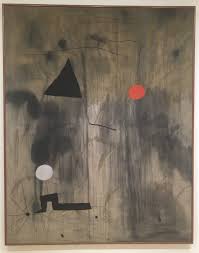
Fig 2. Miro, J. (1925) The Birth of the World [oil on canvas]. At https://www.moma.org/learn/moma_learning/joan-miro-the-birth-of-the-world/

Miro was heavily influenced by the theories of Sigmund Freud and his ideas about the conscious/unconscious mind. Miro and other Surrealist artists used techniques to bring to surface subconscious thoughts and ideas that were purely creative. In ‘Birth of the world’, Miro gained freedom from traditional rules of perspective by creating a surreal variety of ‘abstract painterly incidents’ of ‘scatters, drops, stains, washes and minimal motifs.’ (Anne Umland #artspeaks).

Image result for aleksandr deineka factories
Fig 3. Deineka A. (1926) Building New Factories [Oil on canvas]. At http://arthistoryreference.com/cgi-bin/hd.exe?art2=a33498

Deineka created Socialist Realist paintings that were based upon the social ideals and theories of the Socialist Soviet Union to depict a healthy optimistic and positive view of Soviet life. In Deinika’s painting Building New Factories (1926), both the male and female Soviet are looking strong and healthy. They seem to be happy in their work. The background suggests a healthy and evolving society built with the hands of the people. Paintings based on socialist theories were used as propoganda to show a healthy and idealised Socialist society.

List of Illustrations

Fig 1. Hardie, G. (1986) Venus with Spikes
[Oil on canvas]. At https://gulbenkian.pt/museu/en/works_cam/venus-with-spikes-153519/

Fig 2. Miro, J. (1925) The Birth of the World [oil on canvas]. At https://www.moma.org/learn/moma_learning/joan-miro-the-birth-of-the-world/

Fig 3. Deineka A. (1926) Building New Factories [Oil on canvas]. At http://arthistoryreference.com/cgi-bin/hd.exe?art2=a33498

Bibliography

#ArtSpeaks: Anne Umland and Joan Miró’s “The Birth of the World” MoMA The Museum of Modern Art. At
https://www.facebook.com/watch/?v=10156201410287281 (Accessed 09/11/19)

Saunders, G. (1989), The nude, a new perspective.’ London: The Herbert Press Ltd.

Socialist Realism (Art Term) At https://www.tate.org.uk/art/art-terms/s/socialist-realism (Accessed 09/11/19)

Exercise 1.3

How could the Nazca lines be seen as a work of art?

The Nazca lines in Peru were created in the desert over 2000 years ago and still their purpose remains a mystery. Their patterns and forms are only visible from the air and range from 30- 1200 feet in length. The ‘geolyphs’ (drawings made on the ground) were man made images of animal such as snakes, lizards and birds and geometric patterns. The artists removed the top layer of earth and rocks to reveal a lighter colour. This contrast created a negative image. These images must have been planned and designed using a clever measuring technique. I would also suggest that this was made by many individuals as a ‘group project.’

I thought that the Nazca lines could be compared to other native art forms. The Aborigines used the desert sand to draw maps, retell their history and create ‘dreamtime’ stories. This would have been done with a stick or the hand to create an indent in the sand – similar to the indents of the Nazca lines. The meaning behind the Nazca lines though is unknown.

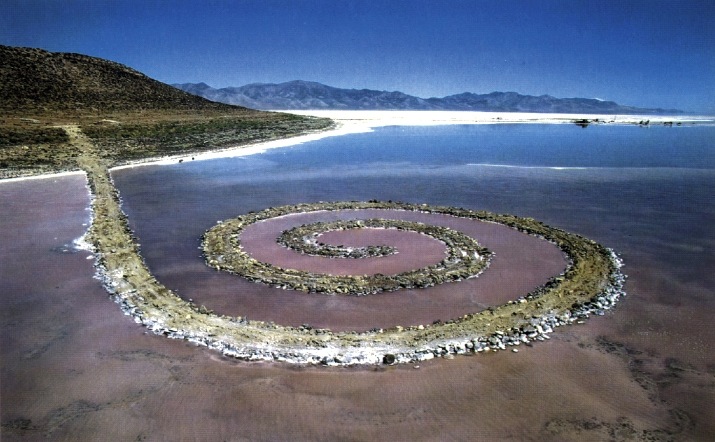
I also considered the Nazca lines as a form of earth or Land art. A deliberate alteration of the land / earth to create a desired image or picture. In the contemporary art world, land artist Robert Smithson took his art outdoors to reconnect art with nature and allow visitors to engage with it by walking the counter clockwise spiral.

This image has an empty alt attribute; its file name is nazca-condor.jpeg
Fig.1 Nazca Lines, The Condor (200 BC – 500 AD) At https://youngzine.org/news/history/nazca-lines-paintings-desert
Image result for smithson jetty
Fig 2. Robert Smithson, Spiral Jetty, 1970 (Great Salt Lake, Utah)
Photo by Gianfranco Gorgoni At https://www.sartle.com/artwork/spiral-jetty-robert-smithson

‘Spiral Jetty’ was created by the movement of earth to create a spiral pattern on the edge of a lake. This could be compared to the Nazca lines that were created in a similar way, albeit without machines. Just as the true image of the Nazca lines can only be seen from the air, the spiral of the jetty can also be only truly viewed from an elevated position. ‘.. many photographs of the Spiral Jetty can be observed from above as though one were flying over them.. These contained images of the object appear as flattened landscapes transported and frozen in time.’ (Lunberry,2002: 86)

Looking at the photograph above, the Nazca lines also look a lot like a print – a lino cut with a simple image or some kind of etching. The only difference here is the scale of the Nazca lines, which are extraordinarily large pieces of artwork, and the materials used.

List of Illustrations

Fig.1 Nazca Lines, The Condor (200 BC – 500 AD) At https://youngzine.org/news/history/nazca-lines-paintings-desert

Fig 2. Robert Smithson, Spiral Jetty, 1970 (Great Salt Lake, Utah)
Photo by Gianfranco Gorgoni At https://www.sartle.com/artwork/spiral-jetty-robert-smithson

Bibliography

Golomb J. Nazca Lines. At https://www.nationalgeographic.com/archaeology-and-history/archaeology/nasca-lines (Accessed 09/11/2019

https://uk.phaidon.com/agenda/art/articles/2013/november/18/explaining-smithsons-spiral-jetty/

Lunberry, C. (2002) ‘Quiet Catastrophe: Robert Smithson’s Spiral Jetty, Vanished’ in Discourse 24.2,Spring 2002 p86-120. At https://muse.jhu.edu/article/39973/summary (Accessed 09/11/2019)

Exercise 1.4

Timeline of digital art

1960’s. Digital painting – Digital tools using a computer.

1970’s –Videos -Computer images, Invention of Digital photography.

Fig 1. Whitney, J. (1971) [video, c., computer-generated
16 mm film] Digital still At http://dada.compart-bremen.de/item/artwork/1198 (Accessed 15/11/2019)

1980’s – Sculptural digital art using machines

1990’s – Video art – movies

2000’s – 3D Digital Sculpture

Picture
fig 2. Mack C. Aboxa Holy Vessel [ Physically based rendering of 3d printed virtual sculpture ] At http://www.kevinmackart.com/aboxa-holy-vessel—aluminum-print.html (Accessed 15/11/2019)

Digital installations

Fig 3. Pyke, M. et al, (2019) Future you Digital Installation (photograph) at https://universaleverything.com/projects/future-you (Accessed 15/11/2019)

List of Illustrations

Fig 1. Whitney, J. (1971) [video, c., computer-generated
16 mm film] Digital still At http://dada.compart-bremen.de/item/artwork/1198 (Accessed 15/11/2019)

fig 2. Mack C. Aboxa Holy Vessel [ Physically based rendering of 3d printed virtual sculpture ] At http://www.kevinmackart.com/aboxa-holy-vessel—aluminum-print.html (Accessed 15/11/2019)

Fig 3. Pyke, M. et al, (2019) Future you Digital Installation (photograph) at https://universaleverything.com/projects/future-you (Accessed 15/11/2019)

Bibliography

Digital Art – Art term At https://www.tate.org.uk/art/art-terms/d/digital-art

https://digitalartmuseum.org/history/ (Accessed 15/11/2019)

Labaco, R. Digital Sculpture as Narrative Art At https://lucasmuseum.org/collection/category/digital-sculpture (Accessed 15/11/2019)

Assignment 1

Part A

What I did miss was any inclusion of what this might mean in 21st centuary contexts- Here you have an image painted in the 1980’s critiqued through much older perspectives- so it would be useful to qualify what this does within this context today. A shortish paragraph would help you to explore this.

Snyder(2016) points out that there is a sense of irony to Tansey’s painting. Tansey’s ‘use of humor, irony, exaggeration, or ridicule to expose and criticize people’s stupidity or vices, particularly in the context of contemporary politics and other topical issues’. (Snyder, 2016). In 21st Century society there is a danger of people believing the reality of what is presented to them by politicians and society. For example, during the recent Brexit campaign, people actually believed the images of a ‘mass exodus’ human migration to the UK posted on buses and plastered across social media. The reality of immigration is actually quite different to the propoganda of this one image. In relation to Tansey’s cow, do you believe that what you percieve is real? Or can you see that what is presented is just a constructed illusion. Do you have the innocent eye?

Bibliography

Snyder, T. (2016) The Innocent Eye Test At Prezi https://prezi.com/47z7oiu8misb/the-innocent-eye-test/ (Accessed 16/11/2019)

Tutor Feedback and Response to Part 1 and Assignment 1

  Open College of the Arts
Tutor report
Student name   Lara Jobson Student number                                  519703
Course/Module  UVC1 Assignment number                                  1

Overall Comments

You have encountered the texts and been thorough in thinking through them, you have tackled the coursework well. At times it does feel as if you move across ideas a little quickly and some further development (wordcount allowing) would be good, so that you can fully articulate the ideas.

The blog is clear and easy to follow. Well done.

Assessment potential (after Assignment 1)

You may want to get credit for your hard work and achievements with the OCA by formally submitting your work for assessment at the end of the module. More and more people are taking the idea of lifelong learning seriously by submitting their work for assessment but it is entirely up to you. We are just as keen to support you whether you study for pleasure or to gain qualifications. Please consider whether you want to put your work forward for assessment and let me know your decision when you submit Assignment 2. I can then give you feedback on how well your work meets the assessment requirements.”

Feedback on assignment Demonstration of technical and Visual Skills, Quality of Outcome, Demonstration of Creativity

Coursework: You have worked thoroughly through the course work and have developed some good insights through encountering the texts,  and this shows in your succinct summaries- such as the construction of social reality/ social construction of reality- you get your interpretation across clearly here.

In the digital section Ex 1.4 some dates here in the setting up of the digital would help to unpack it more- maybe you could make a timeline so as to help the audience locate WHEN as well as WHAT? In this way you will build the context of the area. Also some images of examples would help this explanation- don’t be afraid to put visuals in as they are important when we are talking about visual mediums/ideas and so on. Make sure they are referenced properly. Images are important as they help the narrative of the text and they can also help illuminate issues and concepts that you are discussing- this can also help the word count, as explanations become more succinct.

I liked your metaphor with the Dyson, it made me smile and more important than that what you had the insight to do was to link the exercise to social issues of today- follow these insights theya re valuable actually, and through this you will build correlations and interests that you can further research and exploit.

Again ( following on from the idea above) some references within the Smithson/Nazca section would be good to help you to develop and sure up a line of enquiry- why not put one image next to another within the text and explore them through visual analysis?

There is some work to do I think on 1.2 as this section feels quite scant in its thinking through- I have a feeling that this one was a bit of a struggle, so I would recommend that you come back to this and review it, although the Greenberg quote was apt. Can you just develop a short paragraph on each painting- it would help you to express this verbally as well as visually.

  • Be rigorous in your referencing
  • Use images within the text where possible and appropriate
  • Develop your thinking where you have insights- it’s worth doing this even if it is extra research that you can put in a separate section. These are valuable and you will build a way of thinking and responding to texts.

Food for thought and further development: What do you think of the texts that you have encountered? They are a particular Western gendered gaze- how does that feel today with 21st C eyes? I’m saying this to provoke some further reflective depth, as I  think that some more of your own opinion and voice can develop and come through the text, this will enable you to find your voice and be heard. 

Assignment

Part A This essay/account is thorough and you have dealt with the ideas and concepts in clean way, so that the reader can come along with you and explore your ways of thinking. What I did miss was any inclusion of what this might mean in 21st centuary contexts- Here you have an image painted in the 1980’s critiqued through much older perspectives- so it would be useful to qualify what this does within this context today. A shortish paragraph would help you to explore this and it could be embedded within the essay, as the descriptive text could be edited down to allow for this.

The referencing within the text feels loose and you need to consider this carefully. Use the OCA guidance to help you.

I like to think of the adage THOUGHT, WORD and DEED as a way to reference- let me explain: If it is someone else’s idea or thought reference it, if it is someone else’s  words as in their text or speech then reference it and if it someone else’s action then ref again- this could be an exhibition/painting/performance etc for instance…

Part B

I really liked the inclusion of thinking about Poetics of Perspective- and this aspect could develop more, even in note form within the note section. Again you need to ref properly- please sue examples to help you. If you are unsure how to do this within the text (and once you have looked at the OCA guidance) then you could send me a section to look at via email and I’ll check for you.

Sketchbooks Demonstration of technical and Visual Skills, Demonstration of Creativity

As you go through this course, develop your ideas in sketchbooks, this is important (and where synthesis happens) as research is textual and physical. You can always include ideas/experiments in your blog.

Learning Logs or Blogs/Critical essays Context

See suggestions above.

It was lovely to see your reflection on your trip to Venice- tis was great and this form of primary research is very valuable, more please when you can. I loved the Phyrygian Cap, did you know the Smurfs wear these as well albeit white? These cultural refs are so interesting- I think you would be interested to hear the Podcast History of the world in a 100 objects. It’s a great listen- there is a book as well, but the podcast is better.

Suggested reading/viewing Context

It would be useful for you to read Charles Taliaferro Aesthetics, a beginners guide.

Pointers for the next assignment

Keep going as you are, but develop the areas that are noted above and take this into your next assignment and course work.

  • At the next assignment, please send me the assignment pieces as word docs as well as the blog link- in this way I can annotate them for you, which will be useful from Ass2 onwards.
Tutor name: Michele Whiting
Date 31st October 2019
Next assignment due 25th January 2020

Overall, I was extremely pleased with the feedback from my tutor. I had found the course extremely challenging and was pleased that I hadn’t veered too far off course! Overall, I shall develop my voice further and respond more to texts that I read, use more visual representation alongside texts, develop insights as they develop and continue to visit exhibitions to broaden my knowledge and understanding of art.

Since receiving my feedback I have read the handbook on Harvard referencing and will ensure that I tighten up my referencing in the following exercises and assignments.

My tutor has advised me to add a paragraph to some of the exercises and Assignment 1 to give more detail or a contemporary perspective. I will create a new post with the amendments added to the original text.

Reflections on Part 1

Before starting this course, I was extremely apprehensive as I have not studied academically for over 25 years. I have found part 1 extremely challenging but I have been fascinated with the new ideas and insights that I have gained. I will self-reflect on Assignment 1 using the Assessment criteria outlined on the course to evaluate my progress.

Demonstration of subject based knowledge and understanding

I believe that the exercises in Part 1 provided me with a good understanding of the concepts that enabled me to complete assignment one. I found some of these concepts very challenging to understand and it took time for me to comprehend them. I was surprised that this course would be based on multiple disciplines but found this hugely interesting to be exploring philosophical and sociological theories. These different disciplines have provided me with a broad framework to approach the field of Visual Studies.

Demonstration of research skills

Without a library to access, I have had to learn how to complete research largely through the internet. By using google scholar I have been able to narrow my research to academic journals and text that relate to my subject of enquiry. Initially my research has been quite wide around a subject and I have had to continually re-read the assessment question to narrow my field of enquiry. I need to ensure that I don’t spend too much time delving too deeply into one area of enquiry and learn how to focus on what is relevant. I have discovered that I am able to access certain lectures and academic resources via you tube which will also help me to broaden my subject knowledge.

Demonstration of critical and evaluation skills

I feel that I have been fairly successful in Assignment one in demonstrating the use of critical and evaluation skills. Primarily, I have had to re-read the assignment question many times to ensure that I am answering the question correctly and fully as sometimes I haven’t been quite sure what was being asked of me. Theoretical concepts learnt through part 1 have enabled me to formulate ideas and thoughts on the subject matter and to think about differing points of view. I believe that I have been successful in fully evaluating and reflecting on evidence from differing perspectives and have successfully formulated my own judgements. However, I have a tendency to ruminate and am concerned that this may throw my judgements off course.

Communication

I feel that I have examined the assessment questions thoroughly and have been able to communicate my ideas in a logical progression. I have ensured that concepts and definitions have been fully explored to ensure my discussions are relevant and accurate. I sometimes find it difficult to put my thoughts into words and have to constantly revise my work so that it is coherent.

Assignment One

PART A

Look at the painting The innocent Eye Test by Mark Tansey. The phrase ‘the innocence of the eye’ was coined by British critic John Ruskin in 1857:

The whole technical power of painting depends on our recovery of what may be called the innocence of the eye; that is to say a sort of childish perception of these flat stains of colour, merely as such, without consciousness of what they signify,- as a blind man would see them if suddenly gifted with sight.

Consider what Ruskin is saying and give an interpretation of Tansey’s painting in light of this.

Fig 1. Tansey, M. (1981) The Innocent Eye Test [oil on canvas] at https://www.metmuseum.org/art/collection/search/484972 (Accessed 14/11/2019)

Tansey’s painting ‘the innocent eye test’ was painted in 1981 and depicts scientists/ observers (from around the turn of the 20th century) observing a female cow who is in turn looking at the highly realistic painting ‘The young Bull’ by Paulus Potter (1647). Monet’s grainstack (snow effect)1891, is also visible hanging on the wall of what is probably an art gallery. It would appear that the humans in the painting are waiting to see if the cow responds to a visual representation of the bull and/or tries to eat the hay answering the question to the test – can the cow distinguish between a painting and reality?

The title of the painting ‘The Innocent Eye Test’ refers to a quote made by the Victorian art critic John Ruskin in 1857 as quoted at the top of this page. ‘The innocent eye’ refers to a new way of seeing for the viewer and artist that is free from the academia and tradition of the past. A pure mind that has not been influenced by culture or history. An ability to represent or view nature with the eyes of a child or a blind man suddenly able to see. In relation to Tansey’s cow, Florian Werner asks whether she will be interested in the bull because she;

‘..mistakes his picture for the real thing. Or does she have an innocent eye and like a young child, can see only two-dimensional coloured areas on the canvas but not the three- dimensional world that these areas represent?’ (Werner 2011:97)

Tancey leaves us in a state of unknowing. He cleverly invites us, the viewer, to engage further with the scenario and try to predict the results.

Mitrovic (2013:72) explains that the art historian Ernst Gombrich rejected Ruskin’s ‘innocent eye’ theory and referred to it as a ‘myth’. Humans are incapable of perceiving with this ‘innocent ‘ perspective. Reality is socially constructed. Gombrich believed there could be no visual perception independent of conceptual classification and that one cannot perceive what one cannot classify (Mitrovec 2012:72). Gombrich and Popper argue that one first perceives an object and then recognises what it is based on culturally assigned concepts(Mitrovec 2012:73) Mitrovec states that;

‘Gombrich’s thesis that there is no innocent eye thus implies that all our visual experience is always determined by our capacity to conceptualise the contents of our perception.’ (Mitrovec 2013:72)

Perhaps Ruskin did not mean for his ‘innocent eye’ statement to be taken literally. Writing in a time when art was questioning itself due to the introduction of photography, Ruskin may have been suggesting new ways forward for art that did not rely on realism. The ‘innocent eye’ theory could be seen to have influenced artists like Picasso who strove to paint like a child and not like Da Vinci! The modernist art movement became self-critical and devolved from tradition adopting new ways to represent reality.

Interestingly, Tansey’s painting shows different ways of representing reality on canvas.

Paulus Potter - De Stier.jpg
Fig 2. Potter, P. (1647) Bull [oil on canvas] At https://commons.wikimedia.org/wiki/File:Paulus_Potter_-_Young_Bull.JPG (Accessed 14/11/2019)
Image result for monet haystack paintings
Fig 3. Monet, C. Grainstack in the morning – snow effect (1891) [oil on canvas] At https://commons.wikimedia.org/wiki/File:Monet_grainstack-in-the-morning-snow-effect-1891_W1280.jpg (Accessed 14/11/2019)

The Dutch realistic painting by Potter is of a subject that no-one had painted on such an impressive scale before. The bull was also symbolic of prosperity and power. Monet’s haystacks were also part of the ‘en plein air’ impressionist movement that depicted the reality of the everyday and everyday scenes. Could we ask at this point, what is the best way to represent reality? Tancey’s painting itself is painted in grey monochrome in a traditional style that could actually elude us into thinking it is an photograph. Only the faded scientists at the back that look more like an illustration tell us that this is a painting. These depicted realities could encourage us to explore further realities;

‘In a painted picture, is it the depicted reality, or the picture plane or the multidimensional reality the artist and viewer exist in? That all 3 are involved points to the fact that pictures are inherently problematic…In my work, I’m searching for the pictoral functions that are based on the idea that the painted picture knows itself to be metaphorical, rhetorical, transformational, fictional. My work investigates how different realities interact and abrade.’ (Tansey, M.)

If we consider the ‘innocent eye test’ again, we could now be looking at a metaphorical painting that places us, the viewer, as part of the test. A painting within a painting which allows us to question what is reality? Does this painting challenge us to develop an ‘innocent eye’? Are we able to step outside of our socially constructed reality and glimpse the world through neutral, naive eyes?

The painting of the bull could be a metaphor of our ‘powerful’ socially constructed reality. Like the cow, we could accept this reality as real and absolute truth, or we could reject this reality and see through the illusion (as the cow would see blobs of paint).

Mark Tansey’s painting ‘The Innocent Eye test’ is creating an image on two levels. The first being the visual representation of a scientific experiment that is questioning whether an animal ( in this case a cow) has an ‘innocent eye’. Whether it does or does not is not revealed. We, as the viewer, are given the opportunity to hypothesise what the answer to the test will be. Ruskin’s theory that humans should try to recover this innocent eye to free them of cultural restraints and allow them to view and create art in a primal way is perhaps meant metaphorically and should not be taken too literally. Ruskin is suggesting that artists and viewers should try to throw off the social and cultural socialisation that we all receive through life. We would then be free to explore new realities. This is perhaps what has driven art through the 20th Century.

On a second level, we can also view Tansey’s painting as metaphorical. Tansey is making a statement to the viewer about reality and how different realities ‘react and abrade’ (Tansey). Tansey shows us different realistic paintings within the painting but then also suggests different realities regarding the painting itself. Is the reality the depicted/painted reality, the picture plane reality or the reality between the artist and viewer? Is it possible that Tansey’s representation of multiple realities is a way to deconstruct our conditioned minds and look at the world in new ways and with an innocent eye?

List of Illustrations

Fig 1. Tansey, M. (1981) The Innocent Eye Test [oil on canvas] at https://www.metmuseum.org/art/collection/search/484972 (Accessed 14/11/2019)

Fig 2. Potter, P. (1647) Bull [oil on canvas] At https://commons.wikimedia.org/wiki/File:Paulus_Potter_-_Young_Bull.JPG (Accessed 14/11/2019)

Fig 3. Monet, C. Grainstack in the morning – snow effect (1891) [oil on canvas] At https://commons.wikimedia.org/wiki/File:Monet_grainstack-in-the-morning-snow-effect-1891_W1280.jpg (Accessed 14/11/2019)

Bibliography

Danto, A.C (1992) ‘Beyond the Brillo box: The Visual Arts in Post-historical Perspective.’ London: University of California Press. viewed at https://books.google.co.uk/ (Accessed 14/11/2019)

Turner, C. (2010) Through the eyes of a child . At https://www.tate.org.uk/tate-etc/issue-19-summer-2010/through-eyes-child (Accessed 14/11/2019)

The Innocent Eye Test At https://www.metmuseum.org/art/collection/search/484972 (Accessed 14/11/2019)

Mitrovik, B (2013) Visuality After Gombrich: the Innocence of the Eye and Modern Research in the Philosophy and Psychology of Perception.  Zeitschrift fur Kunstgeschichte. (76) : 71-89 at https://unitec.researchbank.ac.nz/handle/10652/2374 (Accessed 14/11/2019)

Tansey, M (1992) ‘Notes and comments’ in ‘Theories and Documents of Contemporary Art: A sourcebook of Artists’ . Stiles K. Selz P. (2012) University of California Press viewed at https://books.google.co.uk

Werner, F. (2011) ‘Cow: A Bovine Biography’. Canada:Greystone books viewed at https://books.google.co.uk

The Ackerman Blog. Artist Mark Tancey: Ineraction between different realities. At http://www.ackermansfineart.com/mark-tansey/ (Accessed 14/11/2019)

PART B

What are the implications of saying perspective was invented, and what are the implications of saying it was discovered. Assess these two possibilities and give reasons for the one you believe is correct.

It is important to initially obtain an accurate definition and hence understanding of the term ‘perspective’. The Tate Online defines perspective as ‘the representation of objects in three-dimensional space(i.e for representing the visible world) on the two-dimensional surface of a picture.’ The Cambridge Online Dictionary states that the noun ‘perspective’ is the way that objects appear smaller when they are further away and the way parallel lines appear to meet each other at a point in the distance.’ It is also described as ‘a technique of depicting volumes and spatial relationships on a flat surface’. (www.dictionary.com)

From these definitions we can observe that artists have attempted to create perspective across history and within certain cultures. The 20,000 year old Palaeolithic paintings on the cave walls at Lascaux indicate that our ancestors had attempted creating perspective by using the contours of the cave wall to give the animals and scenes an illusion of depth.

Image result for lascaux cave
Fig 1. Lascaux Paleolithic cave painting , France. At http://www.lascaux-dordogne.com/en/lascaux-cave (Accessed 15/11/2019)

Moving forward to the 15th Century Renaissance Italy, the architect Brunelleschi devised a method called ‘linear’ perspective to create accurate representation. He used parallel lines that converged on a single vanishing point on the horizon line. This later developed into two and three point perspective that was adopted by Italian artists such as Da Vinci and Michelangelo. Renaissance linear perspective is commonly deemed to be the first time ‘perspective’ (linear) was discovered/ invented despite the fact that there is some evidence that attempts had been made in Greek and Roman art.

Fresco from the Villa of Publius Fannius Synistor, second-style wall painting, preserved by ash in 79 AD
Fig. 2 Fresco from the Villa of Publius Fannius Synistor, second-style wall painting, preserved by ash in 79 AD. At /www.metmuseum.org/art/collection/search/247017 (Accessed 15/11/2019)

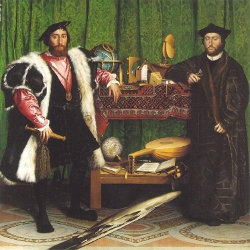
Beyond the Renaissance, other perspective methods have been used to convey an illusion of depth and realism. For example, aerial perspective allows for distant objects to be fainter and more blue creating an illusion of distance and anamorphosis which requires viewers to stand in a specific vantage point.

The Ambassadors, by Holbein
Fig 3. An example of using anamorphosis perspective. Holbein, H the younger (1553) . ‘The Ambassadors‘ [oil on oak] At https://en.wikipedia.org/wiki/The_Ambassadors_(Holbein) (Accessed 15/11/2019)

Perspective is often referred to as having been invented or discovered yet the meaning and implications for each term are quite different. The term ‘invented’ means to design and/or create something that has never been made before. The term discover means to find out something that you did not know before. If perspective was ‘discovered’, it would mean that it would have to already be in existence and be completely independent of any human opinions. Searle refers to these things as ‘brute’ facts and gives examples such as mountains and trees. If perspective was ‘invented’ it would need to be created by a human and would be influenced by their society /culture. )(Searle,1995:72)

Depending on how ‘perspective’ is defined can influence whether it can be described as having been invented or discovered. If we assume that by perspective we mean ‘linear’ perspective (Cambridge online dictionary) it could be argued that this has been discovered. Brunelleschi used Renaissance understanding of mathematics and geometry to base his methods of creating linear perspective. The absolutist view on mathematics is that it is ‘universal, objective and certain with mathematical truths discovered … and then established by proof. Mathematics must be woven into the very fabric of the world.’ (Ernest, 1996) If the absolutists are correct then linear perspective, based on pure and objective truths, was discovered or ‘found’. However, an opposing view termed ‘fallibilist’ opposes this notion and argues that maths is ‘revisable, changing with new mathematical truths being invented, or emerging as the by-products of inventions rather than discovered.’ (Ernest,1996). This would suggest that perspective would have been invented.

We can also view perspective as ‘a technique of depicting volumes and spatial relationships on a flat surface’. (www.dictionary.com) If we accept that the volumes and spatial relationships of objects would exist without human viewing, we can thus surmise that any attempt to recreate this reality on a two-dimensional surface would have to be invented or created.

The implications of arguing the point that perspective or perspective methods are invented suggests that methods of creating can be fluid and ever changing due to new inventions. One example of this can be found in the Cubist movement. In the early twentieth century, artists such as Picasso and Duchamp invented a new way to represent a three-dimensional object on a two- dimensional surface. The Tate states that:

‘By breaking objects and figures down into distinct areas – or planes the artists aimed to show different viewpoints at the same time and within the same space and so suggest their three dimensional form. In doing so they also emphasized the two-dimensional flatness of the canvas instead of creating the illusion of depth. This marked a revolutionary break with the European tradition of creating the illusion of real space from a fixed viewpoint using devices such as linear perspective, which had dominated representation from the Renaissance onwards.’ (Tate online)

This opens up opportunities for artists to create new ways of inventing perspective techniques in the future.

In conclusion, I believe that artists are ‘discovering’ the reality and truth of the spatial distance between objects and ‘inventing’ techniques to depict this three-dimensional effect on a two-dimensional surface. This can be seen in the various techniques by artists used over history that show different ways of creating the illusion of perspective.

List of Illustrations

Fig 1. Lascaux Paleolithic cave painting , France. At http://www.lascaux-dordogne.com/en/lascaux-cave (Accessed 15/11/2019)

Fig. 2 Fresco from the Villa of Publius Fannius Synistor, second-style wall painting, preserved by ash in 79 AD. At /www.metmuseum.org/art/collection/search/247017 (Accessed 15/11/2019)

Fig 3. An example of using anamorphosis perspective. Holbein, H the younger (1553) . ‘The Ambassadors‘ [oil on oak] At https://en.wikipedia.org/wiki/The_Ambassadors_(Holbein) (Accessed 15/11/2019)

Bibliography

Elkins, J. (1994) The poetics of perspective , Cornell University Press. At https://books.google.co.uk (Accessed 15/11/2019)

Ernst, P. (1996) Is mathematics invented or discovered? in PoME journal 12, November 1999 ,At http://webdoc.sub.gwdg.de/edoc/e/pome/pome12/article2.htm (Accessed 15/11/2019)

https://dictionary.cambridge.org/

Lascaux and prehistory. At http://www.lascaux-dordogne.com/ (Accessed 15/11/2019)

Miraoeff, N. (1999) An introduction to Visual Culture, New York: Routledge

Searle, John R. (1995) The construction of Social Reality, London:Penguin Books

http://www.britannica.com

http://www.enclyclopedia.com

http://www.metmuseum.org/art/collection/search/247017

Make a list of the things you know to be invented and things you know to be discovered. Consider what distinguishes them and where perspective is best places. Try to be attentive to counterarguments.

Things Discovered : The earth is spherical, fire, penicillin, electricity, gravity, evolution.

Things invented: combustion engine, light bulb, matches, radio, the internet.

I would argue that objects and their spatial relationships to one another is something that exists independently of humans and would have to have been ‘discovered’ by the development of human consciousness and visual perception. The human techniques used to create ‘perspective’ have been invented because various different cultures and their social realities have invented different ways of representing this reality – from ancient cave paintings to the Cubist movement in the twentieth Century.

Design a site like this with WordPress.com
Get started