This section of the course seemed to flow well for you and it has hit some notes of interest for you which you will be able to follow up on.
Your research and academic skills have developed over the course and I hope that you will continue to enjoy this aspect and bring it soundly into your contextual investigations. Well done.
Feedback on assignment Demonstration of technical and Visual Skills, Quality of Outcome, Demonstration of Creativity
Assignment:
This assignment had a lot going for it, you had used a good structure and good examples particularly. Overall it just needed the aesthetic experience ‘difference’ brought to the fore. It is a balance thing and we discussed it. The contexts are good, examples good and you have developed your thinking of the two forms.
Use your Taliaferro text to help you to discuss the aesthetic. First go through the essay and highlight the areas where this can happen. Then develop those areas. Lastly just bring this into the summation clearly. This will then fully answer the Essay question. Well done on the overall- it was a good read and with this aspect further brought to the fore it will be a sound piece of writing.
Exercises:
Looking across the exercises which on the whole are clear and pragmatic,in particular, I would have another go at 5.3 as the outcome of this wasn’t very clear and it lack contextual pre-cursors- we talked about Duchamp for instance and also the sketchy history of the painted bed- so there are precedence as to why this might be considered ‘art’. When we don’t consider it art what is it? We had a little discussion around this- but if you are not clear then do email me.
5.4 works well, and you have used good examples of institutional critique, with a nice summation at the end. I do particularly enjoy Fred Wilson- got any more images?
I also particularly liked your rationalization of BARR- this is tricky and you have pushed through- power!!
Of note this paragraph.
We could also view the reversal of the chart as moving from the internal world of the mind, passing through emotional states (Fauvism and Expressionism) to the external world (Neo-impressionism) -Visually passing from the unconscious world to the conscious one. It is almost as though (going forwards from conscious to unconscious) artists were trying to purify their art and find some deeper human truth.
And the reflection at the end is super clear-
Well done.
Remember that:
OCA uses UCA’s Harvard Referencing guide which can always be found by Googling UCA Harvard Reference Guide.
Sketchbooks Demonstration of technical and Visual Skills, Demonstration of Creativity
Learning Logs or Blogs/Critical essays Context
Concepts and ideas are developing in your sketchbook, keep going with this and enjoy the process. We discussed synthesis and going forwards into your practical course, so remember to use your research skills now to feed your contextual and philosophic awareness of painting.
Suggested reading/viewing Context
Pointers for the next assignment
Remember to go back and sure up your references across the materials that we have discussed.
Tutor name:
Michele Whiting
Date
10 JULY 2020
Next assignment due
28th August 2020. 12.30
Response to Feedback
I was overall pleased with my feedback from my tutor and understood immediately the areas that I needed to amend and add to. We talked about aesthetics and how I needed to develop this area in Assignment 5 in relation to video installations and the experience of the viewer. We also looked at Exercise 5.3 which lacked any contextual perspective. I shall rework these two pieces addressing these elements and underline any amended and new text.
Assignment 5
In what way do video installations differ from films shown in cinema? List the physical differences and use these as evidence to explain the differences in experience and aesthetic appreciation.
Think about the environment as well as the immediate space in which film is shown. Consider the types of film and select an example for more detailed discussion. (1000 words)
Introduction
Introduction
Films shown in cinemas have been an accessible form of entertainment for the masses over the past 100 years. After the development of hand held recorders in the 1960’s, artists started to create films that differed greatly from those shown in the cinema. As the two have progressed, differences have remained between the two types of film and the environment in which they are displayed. These differences allow for a different experience and aesthetic appreciation in the viewer.
Differences between cinema films and video installations
Films that are played at the cinema tend to fall into one of two categories – narrative and documentary. The main type of narrative film is organised in chronological order (reflective of real life) and in real time. Fictional stories tend to be based on a main line of action with a beginning, middle and an end (elementsofcinema.com accessed 03/08/2020). Viewers connect to the story through the use of characters played by actors following a rehearsed script. Less common are documentary films which expose reality and come from an investigative perspective. (elementsofcinema.com accessed 03/08/2020
Video installations are generally not narrative based or filmed in a linear perspective. They often explore the boundaries of the medium itself (Lee, s.d.) and are varied in their construction. Structuralist artists such as Michael Snow explored the specific characteristics of the medium in their videos. Videos were slowed down/speeded up, edited, played on a loop etc. (Kotz 2008:137). Other video art can produce a maximum sensory impact on the viewer through the use of sound, motion or light. Whereas cinema films have the purpose of entertainment and emotional engagement, video art’s purpose is very much reliant on the intent of the artist and the experience and the interpretation of the viewer.
Different Environments
The environment of films shown in the cinema and installation videos varies enormously and has a large effect on the experience of the viewer. In the theatrical environment of the cinema, the viewers have allocated seats facing forwards towards the large single screen. Lights are eliminated as the screening begins and the audience are immersed in their fairly passive experience (figure 1). They are expected to remain seated and silent for the duration of the film (usually 2 hours).
The cinema itself is part of the entertainment and leisure industry, usually surrounded by restaurants and other venues purpose built for ‘entertainment’.
When viewing a video installation in a gallery, the viewers are free to wander in to the room at any point. Sometimes the rooms are bright and lit and sometimes they are darkened. There is no expectation to stay for the duration of the video and there are usually no or few seats. Projectors might be visible/invisible and screens can be multiple or none – white walls work just as well. There is no norm and so presentation depends on the effect the artist is trying to create. There is even no prerequisite for projections to be shown on a flat surface. The artist Tony Oursler frees his images from the screen and its technical support by projecting them onto three-dimensional surfaces (Kotz 2008:131). ‘Obscura’ consisted of large blinking eyeballs floating on spherical objects. This would create a different aesthetic appreciation in the viewer who is confronted with a new visual experience. The freedom of the gallery allows the viewer to physically explore these 3D projections by moving around the installation. This might create a new experience or perspective in the viewer.
Oursler also took video installation out of the gallery. Site specific work such as The Influence Machine (2000) staged in London’s Soho Square allowed the viewers to move through the installation and experience the urban environment in a new way (Tate online, Accessed 04/08/2020).
The Godfather vs Martyrs
To illustrate the different experiences and aesthetic appreciation of the two types of film, the art installation Martyrs by Bill Viola and the film The Godfather directed by Francis Ford Coppolla will be discussed. The Godfather (1972) is an Oscar winning film about a mafia family and has since been celebrated as one of the best films ever made (Empire:2018). The audience, who at the time of release would have experienced this in the cinema, would be completely immersed in the life of the Corleone family. They would have emotionally responded to events and characters on the screen as they watched this illusion of real life on the large flat screen before them.
In contrast to this cinema film, the work of Bill Viola creates a different experience and aesthetic appreciation in the viewer. Martyrs (Earth, Air, Fire,Water)(2014) is a site specific work of four screens placed in St Paul’s Cathedral, London. Each screen shows an individual who is gradually overwhelmed by the force of an element.
The four screens create a fragmented viewing experience. There is no seating so the viewer has to recieve the work standing or in a fleeting moment whilst passing through the cathedral – emgagment is one of choice/curiosity. The duration of the film is unknown and the viewer can start viewing at any point in the films loop. Viola (2017) explains that martyrs ‘exemplify the human capacity to bear pain, hardship, and even death in order to remain faithful to their values, beliefs, and principles.’ The piece creates a sense of suffering but also a sense of hope (Londonhuawiki online:2017). In reflection, the viewer is able to interpret and appreciate the art work in a way that is personal to them, their beliefs and their spirituality.
Occasionally, there is blurring between the characteristics of films shown in cinema and video installations. One example of this could be 2001: A Space Odyssey by director Stanley Kubrick. Kubrick plays with a loose narrative and includes long meditative visual sequences. At one point the viewer is immersed in a 10 minute sequence of visuals in the ‘star gate sequence’ that would not look out of place in an art gallery.
Video installations and films shown in cinemas create a different experience and aesthetic appreciation in the viewer. This is largely due to the different physical environments of the cinema and the gallery or site-specific placing for the video installation. Cinema films follow a prescribed formula allowing the viewers to appreciate a fairly predictable experience. Video installations, however, place the viewer in a position of uncertainty. The artist ( with no prescribed formula) can manipulate the media in unique ways that allow the viewer to experience the installation in new ways.
My Bed (1988) by Tracy Emin is a gallery installation of Emin’s own bed surrounded by her clutter/objects. The objects hint at Emin’s mental state at the time. Emin’s bed could be termed a ‘readymade’ piece of art similar to Duchamp’s Fountain (1917). The factors which make this bed a work of art are defined by the Tate. The choice of the object by Emin is a creative act in itself. It’s presentation and title give the object a new meaning along with the cancelling out of its usefulness.
The subject matter, a bed, could be seen as an uninteresting and ordinary object but through modern history this subject matter has been explored by artists such as Van Gogh in Bedroom in Arles (1888) and Claude Monet in Cat sleeping on a bed (1865-1870). Without this historical context of the readymade as art and artists painting ordinary objects, Emin’s bed would most likely not be considered a work of art.
I have really enjoyed Part 5 of the course and feel as though it has sparked an interest in contemporary art. I was particularly drawn to the site-specific sculptures of Richard Serra and Nancy Holt. It has also encouraged me to explore video installations and I particularly felt as though I connected with the work of Bill Viola. Overall the whole of the Understanding Visual Culture course has been very rewarding as my knowledge and understanding of art has deepened significantly. I was especially interested in the modern art movement and how this developed. I have not visited an art gallery for over a year due to an injury and the Covid-19 pandemic so am very much looking forward to visiting the Tate Modern with a ‘new perspective’ and a better understanding of the works displayed there.
Assessment Criteria
Demonstration of subjectbased knowledge and understanding
I believe that my knowledge and understanding regarding contemporary art has improved dramatically and that this is reflected in my writing. I have spent a lot of time exploring subjects such as the genre of ‘institutional critique’. I had previously not heard of this term and quickly became aware that this type of art is something that I feel passionately about. Assignment 5 demonstrated my ability to compare and contrast two different uses of the same medium and how the use and placing of this medium creates different effects for the viewer.
Demonstration of Research skills
I am confident that my research skills have improved throughout this course as I am able to locate resources that help me to understand a subject. I have significantly improved my referencing as I take notes during research, I ensure that everything is referenced to author, location of work, date and page number. This helps me to reference accurately and easily when I am writing an exercise or assignment.
Demonstration of critical and evaluation skills
I have been successful thinking critically around a subject. I often research an area and then spend a lot of time thinking and reflecting upon it before I start to write. I feel as though I can apply concepts and wider current issues to the exercises and assignments which, I feel, helps my understanding on a deeper level.
Communication
Following feedback from my tutor, I now feel that my communication and presentation skills are well developed. I am able to organise ideas and thoughts by using subheadings. I effectively use illustrations to visually support the writing element of my work and this helps to engage the reader. I have become better at fully exploring ideas and insights and writing around quotes so that they are fully understood.
In what way do video installations differ from films shown in cinema? List the physical differences and use these as evidence to explain the differences in experience and aesthetic appreciation.
Think about the environment as well as the immediate space in which film is shown. Consider the types of film and select an example for more detailed discussion. (1000 words)
Introduction
Films shown in cinemas have been an accessible form of entertainment for the masses over the past 100 years. After the development of hand held recorders in the 1960’s, artists started to create films that differed greatly from those shown in the cinema. As the two have progressed, differences have remained between the two types of film and the environment in which they are displayed. These differences allow for a different experience and aesthetic appreciation in the viewer.
Differences between cinema films and video installations
Films that are played at the cinema tend to fall into one of two categories – narrative and documentary. The main type of narrative film is organised in chronological order (reflective of real life) and in real time. Fictional stories tend to be based on a main line of action with a beginning, middle and an end (elementsofcinema.com accessed 03/08/2020). Viewers connect to the story through the use of characters played by actors following a rehearsed script. Less common are documentary films which expose reality and come from an investigative perspective. (elementsofcinema.com accessed 03/08/2020
Video installations are generally not narrative based or filmed in a linear perspective. They often explore the boundaries of the medium itself (Lee, s.d.) and are varied in their construction. Structuralist artists such as Michael Snow explored the specific characteristics of the medium in their videos. Videos were slowed down/speeded up, edited, played on a loop etc. (Kotz 2008:137). Other video art can produce a maximum sensory impact on the viewer through the use of sound, motion or light. Whereas cinema films have the purpose of entertainment and emotional engagement, video art’s purpose is very much reliant on the intent of the artist and the experience and the interpretation of the viewer.
Different Environments
The environment of films shown in the cinema and installation videos varies enormously and has a large effect on the experience of the viewer. In the theatrical environment of the cinema, the viewers have allocated seats facing forwards towards the large single screen. Lights are eliminated as the screening begins and the audience are immersed in their fairly passive experience (figure 1). They are expected to remain seated and silent for the duration of the film (usually 2 hours).
The cinema itself is part of the entertainment and leisure industry, usually surrounded by restaurants and other venues purpose built for ‘entertainment’.
When viewing a video installation in a gallery, the viewers are free to wander in to the room at any point. Sometimes the rooms are bright and lit and sometimes they are darkened. There is no expectation to stay for the duration of the video and there are usually no or few seats. Projectors might be visible/invisible and screens can be multiple or none – white walls work just as well. There is no norm and so presentation depends on the effect the artist is trying to create. There is even no prerequisite for projections to be shown on a flat surface. The artist Tony Oursler frees his images from the screen and its technical support by projecting them onto three-dimensional surfaces (Kotz 2008:131). For example, ‘Obscura’ consisted of large blinking eyeballs floating on spherical objects allowing the viewer to experience the isolating effects of technological inter-connectivity as the eyes consume data and information (Tate online, Accessed 04/08/2020).
Oursler also took video installation out of the gallery. Site specific work such as The Influence Machine (2000) staged in London’s Soho Square allowed the viewers to move through the installation and experience the urban environment in a new way (Tate online, Accessed 04/08/2020).
The Godfather vs Martyrs
To illustrate the different experiences and aesthetic appreciation of the two types of film, the art installation Martyrs by Bill Viola and the film The Godfather directed by Francis Ford Coppolla will be discussed. The Godfather (1972) is an Oscar winning film about a mafia family and has since been celebrated as one of the best films ever made (Empire:2018). The audience, who at the time of release would have experienced this in the cinema, would be completely immersed in the life of the Corleone family. They would have emotionally responded to events and characters on the screen as they watched this illusion of real life on the large flat screen before them.
In contrast to this cinema film, the work of Bill Viola creates a different experience for the viewer. Martyrs (Earth, Air, Fire,Water)(2014) is a site specific work of four screens placed in St Paul’s Cathedral, London. Each screen shows an individual who is gradually overwhelmed by the force of an element.
The placing of this work is such that it may just be stumbled across accidentally. There is no seating and viewers can watch as much or as little as they wish. We are presented with the suffering of four individuals at the hands of the elements as they gradually increase and decrease their force. The spiritual environment of this video installation invites a quiet contemplation. Viola (2017) explains that martyrs ‘exemplify the human capacity to bear pain, hardship, and even death in order to remain faithful to their values, beliefs, and principles.’ The piece creates a sense of suffering but also a sense of hope (Londonhuawiki online:2017). In reflection, the viewer is able to interpret the art work in a way that is personal to them, their beliefs and their spirituality.
Occasionally, there is blurring between the characteristics of films shown in cinema and video installations. One example of this could be 2001: A Space Odyssey by director Stanley Kubrick. Kubrick plays with a loose narrative and includes long meditative visual sequences. At one point the viewer is immersed in a 10 minute sequence of visuals in the ‘star gate sequence’ that would not look out of place in an art gallery.
The medium of film is very different when experienced in the cinema than when it is experienced as part of an art installation. The format and environment for cinema films is the same across the world. Viewers know exactly what to expect when they purchase their tickets. When viewers enter a gallery or encounter a site-specific video there is an element of uncertainty. There are no rules or specified formats that the artist has to adhere to. There is room for the viewer to interpret the work in their own way that is personal to them.
Reflections
Last year I visited St. Paul’s cathedral with my niece and nephew for the first time since I was a child. I remember being very overwhelmed by the peaceful and energising atmosphere of the building and stumbling across Martyrs by accident. It had a very powerful effect on myself and my niece and we spent a long time watching it. Had I seen this in a gallery on the internet I don’t believe that it would have been so captivating. The juxtaposition of the bright crystal clear images on the screens with the historical art and sculpture and the hushed atmosphere of the cathedral made it mesmerising.
There was a lot to write about in this assignment. I didn’t include the institutional aspects of the different types of film due to the word count, but felt that this would definitely affect the types of films made. The artist has less pressure to create blockbusting mass-consumed films and therefore has a lot more freedom than traditional film-makers.
In this section of the course you have worked with some complex ideas and engaged with them in a real way using critical thinking and analysis to evaluate and interpret. It shows that your confidence is growing and you have managed to traverse a good range of sources to help your understanding to grow and develop, so considering ‘difference’ and it’s varied aspects/applications recognised through discernment and accepting the complexities of it. Also, remaining open to ideas has enabled you to apply ideas and concepts to appropriate works and consider the 21c values from your position today. Well done.
Feedback on assignment Demonstration of technical and Visual Skills, Quality of Outcome, Demonstration of Creativity
Assignment:
You have considered the complex aspects of ‘difference’ and have defined this very well through application and through the articulation in the essay, meaning that your approaches to critical thinking are developing. You have recognised the nature of complex ideas and theories, and have used disparate sources to help you to navigate this (including lectures and so on on You Tube) This shows your developing research adeptness and ability to begin to articulate the ideas and application of ideas. It is good that you have used a wide base to gain understanding. Remember to be sure of the value of the source in terms of academic provenance, which you are doing, but just as a reminder as you move forwards.
Although the actual essay is clear and pragmatic, you have not used a rigorous method of referencing. We have discussed this and how you can remedy it.
OCA uses UCA’s Harvard Referencing guide which can always be found by Googling UCA Harvard Reference Guide.
In our tutorial we went back over the essay and looked at how and where you should reference fully.
This can then be applied to Ass3 and also to your blog posts for Ass4 and 5 in particular- if you have time go back over the posts for Ass3 and the essay. This will help you set up a firm base for your future courses as well. If you would like me to look at a sample just send me a fresh link and I will ‘pop’ in and have a look for you.
In your blog there are good examples that you have achieved such as:
Although you may want to attribute a page number?
The ref below needs to have the accessed date on attributed in the ref list- check this in the Harvard guide.
These are examples of instances where you can go back and just sure up, then attribute where you might not have in other instances.
The reason for this ‘combing through’ what you have already achieved, is that you need to show your good research and attribute your learning. Without this at assessment you will be falling short of academic standards.
I suggested making some sample references and putting them near your computer as a print out, so that you can readily refer to them as you are writing, rather than having to peel back. This will save you time and also means that you are questioning yourself as you are moving forwards.
In Ass4 the thinking around Wilson and difference is clear and articulated well as I have said above, but there are a couple of areas that you can develop.
Be careful to both reference and define the use of synthesis at the start of the essay.
It would be worth noting the social context that the work was made in in the 90’s (in brief), as it was a movement against- so this involved difference and the action of difference. This will help the conclusion to round up as well.
Remember to write into and out of your quotes. Question the value of them to what you are writing about- how does the quote add to the argument or line of reasoning?
In your exercises I have picked up on a few examples so that you can go back and amend, applying the sentiment/observations to the work in Ass4 and going forwards into Ass5. This will help you to develop the critical writing aspects.
Orphism/synthesis section is very clear, and I enjoyed reading this, the parts where you relate the colour to emotion needed some further unpacking but overall successful. Maybe just go back and add a paragraph explaining this interrelationship between colour and emotion from the Orphist perspective.
There was a nice explanation in the Judas/Deleuze exercise (although it needs a ref for ‘monstrous’ the first time you use the word as it was a concept. Can you link monstrous to open out as to in what way was Deleuze was opposed? He described the effect like this because…
Below is a good paragraph as well, that is clear with good correlations made to Greenburg- you need to say what these comparisons consist of it you can- it is an interesting observation so make the most of it. (Ref Greenburg to here)
The relationship between background and figure creates an ‘indifferent difference’ (Olkowski, 1999) between contradictory and inseparable entities. Olkowski describes this as a ‘highly differentiated kind of pictorial space[s] that draws attention to the surface of the picture’. Comparisons can be made to Greenberg’s theory on modernist art where the emphasis was places on drawing attention to the flat surface of the canvas.
Sketchbooks Demonstration of technical and Visual Skills, Demonstration of Creativity
Learning Logs or Blogs/Critical essays Context
Concepts and ideas are developing in your sketchbook, keep going with this and enjoy the process.
Suggested reading/viewing Context
As you are considering painting for your next course a good read is Painting Now. Suzanne Hudson, and although not new it is pertinent.
A book for the summer- Summers of Discontent. The purpose of the Arts Today. Raymond Tallis. Bitter Lemon Press. Good read collated together by Julian Spalding. Paperback.
Remember to go back and sure up your references across the materials that we have discussed.
Tutor name:
Michele Whiting
Date
10 JULY 2020
Next assignment due
28th August 2020. 12.30
Response to Feedback
Overall, I am very pleased with the feedback from my tutor and it was really nice to chat and be able to ask questions over the face to face tutorial. My main prior concern was that I had not fully understood the theories of difference and so felt delighted when my tutor said that my ideas and interpretations were well thought out. As previously stated, I had struggled to interpret and fully grasp some of the theories on difference and spent a long time attempting to understand primary sources. I now know that if this is problematic in the future, I can look to secondary sources to assist my comprehension. Again, a good and well planned structure and use of illustrations helped me to articulate my ideas and construct a well presented assignment.
After looking through some paragraphs in Assignment 4 with my tutor, it became apparent that I had not been referencing accurately. I have thoroughly re-read the Harvard referencing guide and ensured that all the thoughts that were not my own have been referenced back to their source. In future I shall ensure that referencing is undertaken during note-taking to include page numbers so that I can easily reference my sources.
I shall amend Assignment 4 and then revisit my amended essay for part 3 to ensure it is referenced properly. My tutor has advised me to go back over my blog posts for part 4 and, if time permits, part 3 and ensure these are also referenced accurately.
Amendments to Assignment 4
All amendments are underlined. I was unable to date some of my references which led me to question the academic value of a few of my internet based sources.
Explore Fred Wilson ‘Mining the Museum’ and it’s possible interpretations in terms of difference. (no word count specified)
Introduction
The artist Fred Wilson was born in New York in 1954 and describes himself as of “African, Native American, European and Amerindian” descent. In the early 1990’s, The Contemporary Museum of Baltimore and Maryland Historical Society invited Wilson to create a museum installation in which he was given free reign of their collection and any archived objects with the opportunity to display them in any way he chose. The installation ran from 4th April 1992 to February 28th 1993 and mimicked the usual technique for museum displays – labels, wall texts, lighting, audio material yet his installation created a different experience for the viewer. The exhibition took place just before and during the violent unrest in Las Angeles following the killing of the African-American citizen -Rodney King.
The title of his exhibition ‘Mining the Museum’ can be interpreted in different ways and suggests a deliberate play on words. It could mean Wilson ‘mined’ the museum, perhaps with controversy, ‘mined’ the museum for hidden artefacts or literally made the museum his own (mine) (Garfield,1993). There are many different theories about ‘difference’ from philosophers throughout history. It is possible to interpret ‘Mining the Museum’ in terms of difference by looking at how Wilson managed to create a synthesis of black and white history (Hegel, 1817), indicated differences in power through selected objects (Hegel, 1807) and enabled a consciousness shift in the viewer by rejecting traditional museum categorisation (Deleuze, 1968) .
Synthesis of black and white history
The 19th Century philosopher G.W.F. Hegel (1817), argued that for the world to progress it required unification of two opposing or different forces. The thesis and antithesis would unite in the synthesis to provide a more balanced truth. This process would repeat infinitely as the synthesis became the thesis. Wilson was able to unite two opposing or different histories in ‘Mining the Museum’and create a new synthesis of the black and white history of Maryland.
The traditional exhibitions of the Maryland Historical Society museum focused on a mainly white past that excluded a whole history of African and Native Americans. Wilson retrieved forgotten and archived artefacts from these neglected people’s history and placed them in his installation (Halle, 1993:170). He was able to bring light to a ‘history and cultural presence that had been buried beneath layers of neglect and deliberate exclusion‘ (Halle, 1993:170). This burial of history and artefacts was now unearthed and presented in Wilson’s displays.
Fig 2. Wilson, F. (1992) installation “Metalwork 1793-1880.” [Historical objects form the Maryland Historical Society] ‘Mining the Museum exhibition’ At https://beautifultrouble.org/case/mining-the-museum/ (Accessed 10/06/2020)
In ‘Metalwork 1793-1880’ (Fig 1.) Wilson placed two different types of metal-ware together in a display case. By surrounding slave shackles with silverware from wealthy white families of the 19th Century we are confronted with two different and opposing experiences of local history (Fig 1.). One history representing the white population – its wealth, exuberant luxury and superiority. The other representing the black, inferior and enslaved population forcibly taken from Africa and shackled in American life.
According to the Hegelian dialectic, the opposing and contradictory thesis (white, visible history) and antithesis (black, hidden history) were reconciled in ‘Metalwork 1793-1880’ to create a synthesis that gave Maryland’s history a higher level of truth. The two objects juxtaposed created tension for the viewer by illuminating the two experiences of Maryland history side by side (Ginsberg:accessed 20/06/2020)
In ‘Pedestals, Globe and Busts’, Wilson placed a gold and silver Globe bearing the word truth – an old trophy given to advertising clubs in the early 20th Century, between two sets of pedestals. On the left of the Globe were three empty pedestals labelled ‘Frederick Douglas’, ‘Harriet Tubman’ and ‘Benjamin Banneker’. All three were major African-American historical figures who at one time lived in Maryland. On the right of the globe were three pedestals that contained the busts of Henry Clay, Napoleon Bonaparte and Andrew Jackson. The three busts were of white political or military figures, none of which had any connection to the local history of Maryland. In this unity of historical people, the absence of the busts of significant local black historical figures indicates an invisible history running parallel to a visible white male history that was in a position to record its own version of history (Corrin 1993:306). The ‘Truth Trophy’ invites the viewer to see the truth about how history is recorded and portrayed by the institutions concerned. The weakness of recording an accurate history comparable to the weakness of advertising (Halle, 1993:171).
Differences in power
In his book ‘Phenomenology of Spirit’ (1807), Hegel wrote about the Master and Slave Dialectic that describes the power relationships between groups of people. In this relationship there is a superior and a subordinate group of people which can be based according to criteria such as race, gender or wealth. The Master is always independent, privileged and able to decision-make. The slave, however, is dependant, ignorant, controlled and alienated (Sadler, 2013:accessed 20/06/2020).
Wilson’s installation can be seen to have emphasised the differences in power experienced by the people of Maryland’s past. In terms of Master and Slave dialectic, Maryland’s history would have experienced opposing forces of superior and inferior people. The white population (master) were the privileged, decision makers with all of the power, wealth and control. The black Africans (slaves), and also the indigenous population were dependant, kept in ignorance and poverty with no power or influence.
The contrasting sizes and careful placement of objects by Wilson would have signified this power inequality to the viewer (Corrin, 1993: 309). In ‘Modes of Transport 1770-1910’ (Fig 4. ) the room was dominated by a large ornately decorated Sedan chair that was used to carry the powerful Governor Eden of Maryland during the 18th Century. (Fig.5)
Behind the Sedan chair and of a significantly smaller scale was a model of the Baltimore clipper that was converted to a slave ship after 1812. The visual impact of this very small model of a ship used to carry thousands of slaves and the large single seated chair suggested the power inequalities of the two groups. (Corrin, 1993:309) In ‘Metalwork 1793-1880’ (Fig 2.) the slave shackles themselves were placed in the cabinet in a way that suggests oppression. The objects could almost symbolize the bodies of the past – the black shackles crumpled on the ground with the ornate bright silverware encircling and dominating over the top of them.
Aristotle andInstitutional categorisation
Prior to ‘Mining the Museum’ Wilson had created installations that drew attention to curatorial practices and the affect that these had on the viewers interpretation and understanding of history (Corrin, 1993:303-4). In ‘Mining the Museum’, Wilson focused on the museum as a formal space and its perceived neutrality when displaying objects from the past. He was able to challenge the traditions of ordering and presenting objects from history. The installation explored not what objects mean but how meaning is created when they are placed within the museum (Corrin, 1993:306).
Museums and other institutions categorise objects and things on their identity. This traditional way of organising different objects or things goes back to Aristotle and his ideas on ‘specific’ difference. Objects are categorised according to negation and their opposition to one another, for example can fly/can’t fly or silver/not silver. Aristotle claimed that there were divisions within being that divided things into categories, genres, and species etc. We are then able to fit objects into this system of categorisation. (Williams, 2003:63-64) Museums tend to categorise their items and display them according to this principle.
In ‘Mining the Museum’, the placing of different objects together by Wilson disrupted this traditional categorisation within the museum. It gave us a post-structuralist view of objects and the history they represent. Wilson allowed ” …the power of objects to speak when the ‘laws’ governing museum practices [were] expanded and the artificial boundaries museums build [were] removed.” (Ginsberg s.d accessed 20/06/2020)Displaying artefacts unconventionally allowed Wilson to portray a deeper and more honest version of the past.
Heightening awareness through difference(Deleuze)
Wilson’s exhibition allowed viewers to interpret a new and truer version of history by exhibiting items from the black and native american people that were previously not on display. He also created the potential to heighten the viewer’s awareness of history by disrupting the traditional categorisation of historical objects based on identity. The French philosopher Gilles Deleuze (1925-1995) rejected Aristotle and Hegel’s theories of difference – both based on specific differences and opposition (Williams, 2003). Deleuze believed that ‘to be’ is the same for all things and that being is in a constant state of motion. Generalising does not take into account ‘newness’ or the ability of things to evolve and change (Martin-Jones &Sutton, 2008:46). Wilson’s installation resisted categorisation based on negation and created room for newness- of perspective and concepts in the form of affirmation.
Wilson created tension in his installation by juxtaposing different objects to create new concepts (Halle, 1993:170). The viewer was no longer passive but active in interpreting objects placed in an unconventional manner.
In ‘Modes of transport (1770-1910) Wilson placed a klu klux Klan head inside a 19th Century white baby’s pram. What did these two unrelated objects mean to the viewer? The concept signified here suggested that racism was inherited and passed from parent to child. This simple placement of two different objects together allowed the viewer to question where racism originates from and created the potential for a new perspective to evolve. Wilson has effectively, encouraged the shackled people in Plato’s cave to turn around and question the shadows displayed before them.
Conclusion
It is possible to interpret ‘Mining the Museum’ in terms of difference in several ways. Firstly, the installation was able to tell the history of Maryland that wasn’t bias towards the ‘white’ culture. Placement or non-placement (Installation of Pedestals, Truth Globe and Busts) of items together created a synthesis of white, superior visible history and black, inferior invisible history. The viewers were given a more honest representation of their history. Secondly, the installation was able to indicate differences in power between African and the indigenous Americans and the white population through the positioning and sizing of the artefacts. Lastly, Wilson was able to heighten awareness of his viewers by rejecting the traditional classification of objects and allowing a more Deleuzian approach to his installation.
Wilson’s installation is sadly still as relevant today as it was in the 1990’s. The L.A unrest of the 1990’s has been echoed by the sad killing of African-American George Floyd by a white Police Officer earlier this year. The differing experiences of the citizens of Maryland’s past, as seen in ‘Mining the Museum’, are still rippling and underlying the fabric of American society.
Reflections
I am extremely pleased that I selected ‘Mining the Museum’ for this Assignment as it was a very powerful installation. It seems especially relevant at the moment in light of the Black Lives Matter Movement and the murder of George Lloyd. I find it fascinating and deeply satisfying that people are removing and demanding the removal of statues of individuals with a history related to the slave trade, the exploitation of other nations or even for holding racist views. I personally am shocked that these statues exist and feel quite ignorant that I was unaware of them. Again, these physical protests bring to light the question of who records and documents our history? Why were these people immortalised in a statue and whose version of history is on display? Yet, as Wilson implies in Modes of Transport, were the views of these individuals (such as Robert Baden-Powell )inherited and something that was ‘bred’ into them? Would we have had the same views towards others if we had been socialised and conditioned in the same way?
It was extremely challenging to bring philosophical theories of difference into Wilson’s installation as I found the theories extremely complex.
Fig 2. Wilson, F. (1992) installation “Metalwork 1793-1880.” [Historical objects form the Maryland Historical Society] ‘Mining the Museum exhibition’ At https://beautifultrouble.org/case/mining-the-museum/ (Accessed 10/06/2020)
Martin-Jones, D. &Sutton D. (2008) Deleuze Reframed New York I.B Tauris & Co.Ltd.
Williams, J. (2003) Gilles Deleuze’s “Difference and Repetition”. A critical introduction and guide. Edinburgh University Press
Amendments to Part 4 Exercises
EXERCISE 4.5
Apply the dialectic diagram to Barr’s. What would count as a thesis, an antithesis and a synthesis. You will need to refer to images of art works for a persuasive answer.
By studying Barr’s chart, it can be shown that at the beginning of the 20th Century Cubism acts as a thesis whilst Fauvism acts as an opposing antithesis. The emergence of Orphism can be seen as a synthesis of both of these two movements, being influenced by and using elements of both. To demonstrate this synthesis, the fundamentals of each movement will be discussed and art works indicated.
Cubism (Thesis)
Cubism was invented around the year 1907 by artists Pablo Picasso and Georges Braque. Analytical cubism gave way to synthetic cubism as the artists developed their ideas. Picasso and Braque developed a new form of realism that abandoned the traditional single point perspective form of representation. Instead they created a new form of realism to convey form and structure more accurately and convincingly. Inspired by Cezanne, who constructed forms out of different planes, Analytical Cubism used multiple viewpoints that created an experience of three dimensional objects in space and time. Movement is continuous as the viewer constructs, not just through sight but through thought as well, the suggestion of an object (Dempsey, 2002:85). Objects were reduced and fragmented to depict volume and mass in space.
Mandora (Fig 3.) illustrates the new perspective explored in analytical cubism. Overlapping planes, fragmented form and structure give the illusion of a more realistic depiction of subjects in space and time (Tate online , Accessed 20/05/2020). It reflects our experience of life that flows through movement in time rather than exists in a static state.
In both Braque’s Mandora (Fig 3) and Picasso’s The Accordionist (Fig 4) the subject matter is similar. The two artists focused on neutral subject matter (still life) and completed their images in a subdued and monochromatic palette. This ensured that the whole of the viewers’ attention was focused upon the structure of the form and the density of the image (Tate online, accessed 20/05/2020)
In Synthetic Cubism (Fig 5), the artists started to flatten the image rather than breaking it down into multiple viewpoints. Experiments with collage, textures and patterns in their art helped to achieve this, alongside large blocks of colour (Dempsey, 2002:85).
Fauvism was a movement that existed between 1905 and 1910 and included artists such as Henri Matisse and Andre Derain. After an exhibition at the salon d’automne in Paris, in 1905, the critic Louis Vauxcelles labelled this group of artists Les Fauves (wild beasts) due to their use of bold colours and wild brushstrokes. Unlike the cubists, who focused on realism of form, depth and structure through movement and time, the belief amongst this group of artists was that art should evoke emotional sensations through form and colour. The artists primarily expressed themselves through the use of bold, unnatural, strong colours which served to create atmosphere.
Matisse’s Joy of Life (Fig 6) illustrates the Fauvist’s strong use of colour which creates a warm, inviting atmosphere. The curving simple lines create the forms of bodies reclining and relaxing amongst nature. The expression through colour and the simplified forms evokes sensations of pleasure and physical delight. Similar to the cubists, the fauvists rejected traditional three-dimensional space and used flat areas of colour and spontaneous brushwork to flatten the surface of the canvas.
Scientific colour theory was important to the Fauvists and they paid particular interest in the 19th Century colour theories relating to the effects of complementary colours (Essaulova, accessed 20/05/2020). In Bridge to Charing Cross (Fig 7), Derain uses complementary colours to heighten the scene and allow the contrasting colours to heighten the impact of the painting.
The thesis (Analytical cubism) and the antithesis (Fauvism) act in opposition to one another. Cubism focuses on the structure of form and mass through time and space whereas Fauvism focuses on the expression of emotion through the use of colour and simple forms. Both movements reject the traditional forms of representation and flatten or give depth to the image. The synthesis for these two art movements is that of Orphism.
Orphism, that evolved from about 1912, included artists such as Frantisek Kupka, Robert Delauney and Sonia Delauney. These artists were highly influenced by the cubist and Fauvist movements taking elements from each. Fig 8. illustrates Delauney’s Red Tower which shows the representation of the subject matter from multiple viewpoints but also shows some Fauvist qualities by introducing a more striking subject matter and the use of bright bold colours.
As Orphism progressed, they started to move beyond reality into pure abstraction. There was a mystical and spiritual element to their paintings through the use of colour and shape. Like the Fauvists, colour theory became very important as they learnt the interrelationships of colour, light and movement and applied it to their work. Contrasting colours, colour harmonies and rhythms create expression that gives depth, form, movement and an emotional content (The art story accessed 20/05/2020). The Orphist artist Guillaume Appollinaire(1880-1918) developed an anlalogy between music and painting. He believed that pure colour abstractions had a similar effect on the emotions of the viewer as to the listener (Dempsey, 2002:99)
In the later stages of Orphism we can see a fusion of pure abstracted forms and an expressive interplay of colour (Fig 9. Prismes electriques) (Tate online, accessed 20/05/2020). The result is an expressive form of abstract art that draws attention to the flat surface of the canvas.
Orphism is a synthesis of Analytical cubism and Fauvism. Both movements rejected the traditional representation of three dimensional reality pushing them both towards near abstraction of form and a flattening of the image. The Orphists expressed themselves through bold bright colours based on colour theories of the time (Fauvism) and embraced the multiple fragmented viewpoints of cubism that ultimately led to pure abstraction.
Reflections
This was a very interesting exercise and it was fascinating to see how two movements could influence artists of the time. There seemed to be more opposing forces between Fauvism and Cubism than similarities, yet the two movements seemed to inspire the Orphists to create one of the earliest approaches to complete abstraction.
“Let us imagine something which is distinguished – and yet that from which it is distinguished is not distinguished from it. The flash of lightening for example, is distinguished from the black sky, but must carry the sky along with it… One would say that the bottom rises to the surface, without ceasing to be the bottom. There is, on both sides, something cruel – and even monstrous – in this struggle against an elusive adversary, where the distinguished is opposed to something which cannot be distinguished from it, and which continues to embrace that which is divorced from it.” (Deleuze, 2014:361 cited in OCA UVC handbook 2016:105)
In Giotti’s painting ‘The Kiss of Judas’ (1305), we are able differentiate the figure and the background. As there is no use of single point perspective or illusion of three dimensions, there is no ordering of the space (Olkowski, 1999:17). This means that the bottom of the painting (or the distinguished background) rises up to the surface of the canvas, just as;
‘The flash of lightening… is distinguished from the black sky, but must carry the sky along with it… One would say that the bottom rises to the surface without ceasing to be the bottom.’ (Deleuze, 2014:361 cited in OCA UVC handbook 2016:105)
The figures in the painting are distinguished from the background yet carry the background with it. Deleuze describes this effect as ‘monstrous’ (Deleuze, 2014:361 cited in OCA UVC handbook 2016:105). This is quite a strong word to use and it would suggest that Deleuze disliked the flatness and distortion it created in the image. Form and representation have been destroyed through the creation of a depth-less surface and a flattening of the image.
The figures in the ‘The King of Judas’ fresco have all been painted form a side on perspective which further emphasises the flatness of the image. This resonates with the Ancient Egyptian art and writing which places the human form in a similar manner. Alongside the figures, the background has risen to the surface. The relationship between background and figure creates an ‘indifferent difference’ (Olkowski, 1999) between contradictory and inseparable entities. Olkowski describes this as a ‘highly differentiated kind of pictorial space[s] that draws attention to the surface of the picture’. Comparisons can be made to Greenberg’s theory on modernist art where the emphasis was places on drawing attention to the flat surface of the canvas (Greenberg, 1965). Due to the abandonment of the traditional depiction of three dimensional space, the images in modernist painting became flattened in a way similar to ‘The Kiss of Judas’. We are in no doubt that we are looking at images painted onto a flat surface .
I must admit to struggling with the theories of difference in Part 4. I particularly found it really hard to understand Deleuze and had to do a lot of reading. Unfortunately, the more I read the deeper into the realms of philosophy I got and found myself lost a lot of the time. Watching simple introductions on you tube by lecturers and students helped me to grasp the basics – hopefully!
I knew instantly when I reached Assignment 4 that I wanted to investigate Fred Wilson’s installation. I had briefly come across this work watching a you tube lecture and knew then that I should explore this further. I commented in my notes how relevant this work is today in light of the death of George Floyd and the removal of certain statues. Although fascinated by this work of art, I struggled immensely interpreting it in terms of difference and had to do a lot of background research to achieve this.
Assessment Criteria
Demonstration of subjectbased knowledge and understanding
I completed a lot of reading around theories of difference because I felt lacking in confidence and unsure that I had understood them properly. I was especially drawn to the work of Deleuze because his philosophy seemed to resonate with my own beliefs. The subject of difference is something that I have never consciously considered on a deeper level before and was amazed at how it can affect the way that we perceive the world. Assignment 4 provided me with an opportunity to actively apply these theories to a piece of art work and allow for a deeper interpretation of it.
Demonstration of Research skills
I have been successful at researching the relevant areas for part 4. Where I have become stuck and unable to comprehend certain works, I have looked to secondary sources that were easier to understand. This included you tube tutorials and secondary journals and books about relevant philosophers.
Demonstration of critical and evaluation skills
I have effectively engaged with concepts and theories and applied them to my written work. I have analysed and investigated theories of ‘difference’. Through critical thinking I have been able to evaluate and interpret these theories and apply them relevantly to a piece of art. I have also been able to reflect on the relevance of the art and the theories in today’s current issues.
Communication
I feel more confident when communicating my ideas in written form. This is due to responding to my tutor’s feedback and breaking up my assignment into relevant sections. I have ensured that any points or insights have been fully explored and have explained them fully without the assumption that the viewer has any prior knowledge to the subject.
Again a well collated and worked through set of exercises and assignment writing. It is clear that your reading is more in depth and this has enabled your reading of allegory and critical ideas to evolve. You are now evaluating complex information and dealing with it in a comprehensive and clear way. Your communication of some big ideas has developed as well as your discernment of visual material with which to work.
Feedback on assignment Demonstration of technical and Visual Skills, Quality of Outcome, Demonstration of Creativity
I have made some annotations on your document, some comments are below.
Assignment: Plato’s Cave is a difficult exploration in the sense that – as you noted- there are many correlations to the world today, so it is hard to discern a pathway through. However, you have, and have threaded your way through visual culture to reflect on various aspects that you have identified. It was good to see you referring to Michael Moore and indeed the comment …’If the prisoners are now free to become projectionist then maybe some people could use the media as a platform to enlighten others.’ Was a good summation of the earlier text, prior to the conclusion, well thought through and clearly had led from your research. I feel that your visual and cultural research has improved and become more curious (which is a good thing) reflecting in the discernment of your examples.
In the following example: The projectionists could be seen as those in power – governing bodies but also on a larger scale, capitalists and corporations who profit from our seduction of the images on the cave wall. Berry (2010 ) states that:’.. the information age floods our senses with endless imagery that we cannot avoid. The narrative has metamorphosed, however, the deceiving actors relating confusing information, for instance, no longer represent just our perceptual apparatus and reliance on convention but a corporate-sponsored, globalising, capitalist regime.’ The use of this long quote needed some opening out in your own terms, it is excellent to use the vital words of others but aim to make clear the use and value of the quote opening up this perceived shift before moving onto the next Para around Baudrillard’s argument and onwards.
In general we must, when introducing an example say clearly why that was used to illustrate the issue, the Chanel example was one such case, which you claim is fetishized but need to say how and in what ways this might be the case – and weave it into your critical observation- stay with it to expand on your good ideas.
I always think that it is interesting in the sense of gender to move from considering the intelligence and enlightenment of ‘men’ to the gendered shifts in our 21st Centuary visual culture and a necessary shift like this is better noted than not.
Returning to your text, it was good to see the reference to Martin Luther King and John Lennon- another good insight but one that needed expanding on, it was not enough to say that they were enlightened (even though we know what you mean) rather in this form of essay you need to say how and in what ways this manifested and continue to relate and use your ref back to Plato. It is a question of using some word count to open up the good ideas and build the line of reasoning- in this essay it being the validity to today or not.
It was good to see you looking at the differing viewpoints and gaining confidence in exploring. Overall a good account that just needs a little further writing into to explore the key concepts fully. Your evaluation and discernment of them is good. My advice would be to highlight them and just question if they are fully opened up and explored (as much as you can) and if not take a little time to make the careful adjustments. Well done.
Exercises. You have worked through some testing ideas and have come to your own points of view, I particularly appreciated the note on Emerson’s understanding of Man as being of nature not set apart from it- in a sense if only we had listened! The ‘poetics’ of his work is an area that I think you might become more interested in, it goes back to Aristotle and ‘a poetic’ is often a form of philosophical reading within contemporary art practices, often stemming from Gaston Bachelard’s seminal text: A Poetics of Space, which if you haven’t read it before I would advise you to. Aristotle assumed that a poetic gave underlying truths to us, whilst histories deals with facts, which are merely versions.
General Comment: One aspect that is developing well within your exercises, is the notion that you need to define what something might be- this will stand you in good stead; it can be confusing at times because definitions can be multiple and can shift- so when you have defined something look out for the mutability of it, and note these shifts as you come amongst them.
In the exercise about Art remaining a distinct category, you note your reworking of it, and you have managed to make a coherent unpacking of the complex question. The later half of dealing with Aesthetics, Morals/ethics and the social expectation of Art is less developed but you have come to a clear point of view that Art is ‘best seen’ as a ‘species’ of Visual Culture- which your reading and re-working led you to.
I enjoyed your collation of meta-paintings and there was a confidence in this exercise that was good to see. Your application of the notion of a Meta painting evolved from the obvious into a more thoughtful set of ideas of what Meta Painting can be- Dali’s image reaching for a ‘mise en abine’ taking us far beyond any comfort in looking. Well done.
In the Whiteread House piece,the exposition of the indexical sign is clear, you have steered a path through this well. One small thing is that you point to the politic of the work but don’t really contextualise this enough so as to situate the making of the work. It is useful sometimes to use tangential research to help us, so don’t be reticent to do this in a brief way (so as not to take up huge portions of an essay) in the future.
Sketchbooks Demonstration of technical and Visual Skills, Demonstration of Creativity
Learning Logs or Blogs/Critical essays Context
Great to see some of your ideas developing well in the sketchbook, it will really help the synthesis of what you’re finding out and help inform your creative practice.
Suggested reading/viewing Context
Poetics, Aristotle.
Poetics of Space Gaston Bachelard
Harrison, C. and Wood, P. (eds.) (2002) Art in Theory 1900–2000: An Anthology of Changing Ideas. Oxford: Blackwell. A useful go to text.
Pointers for the next assignment
At the next assignment, please send me the assignment as word docs.
Well done, keep the impetus up now, you are building on your research and critical skills.
Tutor name:
Michele Whiting
Date
6th June 2020
Next assignment due
27th July 2020 Please contact me to confirm date/time, it would be good to meet online for a tutorial if possible.
Response to Feedback
I was very pleased with the feedback from my tutor. My exercises were well received and I was pleased that I had managed to organise my assignment in an effective way that allowed it to read better.
I shall in future ensure that any long quotes are carefully chosen and ensure that I write into and out of the quote to make it relevant and valuable. I can now see that sometimes I use examples to illustrate a point but do not fully explain or expand upon the ideas surrounding these examples. I shall ensure that when using examples I will fully explore how this example validates a theory or an idea.
I have amended my assignment (underlined below) based on the comments from my tutor.
Assignment 3 amended
Amended sections are underlinedand references have been added in line with feedback from Part 4
Read Plato’s account of the Allegory of the Cave and say whether and why you think it is valid today.
Introduction
‘The Allegory of the Cave’ was written by Plato as part of his collective books ‘The Republic’ approximately 2300 years ago in the height of the Greek’s classical age. The allegory is relevant today in many ways. It highlights the ability of the individual to become an enlightened being and what that might mean for society. It also offers a fresh and unique perspective on certain aspects of human societies as well as society as a whole.
In a dialogue between Socrates and Glaucon, Plato describes a cave with men shackled facing the cave wall so that they cannot move their bodies or their heads. Behind them and higher up, a fire burns whilst other men carry in front of it objects that cast a shadow on the cave wall that the shackled men can see. The men name these shadows through agreement and consensus and believe them to be real as they know no different. When one man is freed from his shackles, he turns and is dazzled by the fire light only to be confused by the objects he is seeing. When leaving the cave he struggles to see the things clearly. The sunlight is too bright to see so he starts to look at shadows and reflections and then the stars at night before finally seeing the sun and its true nature. If that man were to feel compelled to return to the cave and try to tell the prisoners about the real world outside, he would be ridiculed and possibly killed for his delusional behaviour.
Education and enlightenment
Plato intended the allegory to refer to and criticise the education of the individual and the masses. ‘Compare our nature in respect of education and its lack to such an experienceas this.'(Plato B.C.E 517:514) The allegory places the individual in a passive state, accepting and unquestioning what they see. In today’s world this could be our socially constructed reality and the acceptance of institutional facts and belief systems (Searle 1995:2). The descent out of the cave was a descent out of ignorance and into enlightenment. Plato saw this as leaving the world of the material forms (copies) and into the realm of the mind and the ideal, the world of the philosopher. Today we could see this as an ascent into a bigger perspective or an awakening of a deeper understanding of reality beyond what we are presented with from birth.
The freed prisoner ‘compelled to stand up suddenly and turn his head around’ (Plato, B.C.E 517:515) would be turning away from an illusion and confronting the real world. The light from the fire signifying the artificially created light and knowledge and the light from the sun signifying pure truth and light. The individual ‘..in doing all this felt pain.. and was unable to discern the objects whose shadows he formerly saw..'(Plato, B.C.E 517:515) The experience of awakening to a more truthful reality would be confusing and painful.
In the film The Matrix,(1990) Neo awakes in the real world of the machines struggling to see with painful eyes. He ascended out of the ‘cave’ after swallowing the red pill enabling him to leave the illusionary world of the matrix and enter the grim real world of the machines.
There are many individuals who have freed themselves from the chains of the cave. John Lennon and Martin Luther King could be seen to have rejected the reality that was presented to them and enlightened themselves outside the cave – whether this was in regard to racial inequality or peaceful living. They questioned the fixed reality presented to them and sought to make changes through protests and demonstrations. When they returned to the cave to enlighten and liberate others they faced tough opposition – ‘Would he not provoke laughter, and would it not be said of him that he had returned…. with his eyes ruined.. And if it were not possible to lay hands on and to kill the man who tried to release them..would they not kill him? (Plato, B.C.E 517:517). Both John Lennon and Martin Luther King were assassinated.
Unless there is a strong enough incentive for others to turn their heads and discover a new reality, those returning to the cave are seen as a threat. For Plato, the majority of ordinary people only see the material surface of reality and do not see through it to the divine forms themselves. Outside the cave could be described as an encounter with the ‘immaterial sublime’. Emmerson called this seeing with the ‘transparent eyeball’ a moment of insight and transcendence (Emmerson 1883). ‘..the soul is able to endure the contemplation of essence and the brightest region of being.’ ( Plato, B.C.E 517:518) Religious figures, such as Jesus (who was crucified) and the Buddha, could be seen to have had this moment of insight.
Mass Media and Technology
The images and shadows cast on the cave wall could be regarded as a metaphor for the mass media via technology in today’s world. We are inundated by images displayed through screens that we view via phones, laptops, tv’s and tablets. We name these images and apps – facebook, tv documentaries, newspaper articles and they reinforce our reality. Even the fictional content reinforces our reality or world view. ‘Then in every way such prisoners would deem reality to be nothing else than the shadows of the artificial objects.’ (Plato, B.C.E 517:515). Baudrillard(1983) describes this as the age of the ‘hyperrreal’ The artificial has become more real than the real itself.
‘Having never left the cave, and having no experience of that larger extra-cavern universe,the cave dwellers naively experience shadows on the wall as actuality, appearances as the real thing, these mere semblances as the ‘really real‘ (Plantiga, 1996 cited in Allen & Handley 2018:368).
The flickers of the shadows have been replaced by the flickering of the screen.
Screens are everywhere in today’s society – TV’s, phones and tablets reside in houses and public buildings. The world viewed and experienced through the screen is not a true reality. Reality shows are scripted or contrived with unstable personalities to create tension. Fame, celebrity, the illusion of the ideal relationship are not what they are perceived to be. Facebook pages are filled with only the beautiful, exciting aspects of our lives -never the nitty-gritty. Plato’s corrupt copy (media) has lost connection with the original. In the instance of journalism,the audience gains second hand information through various sources – tv news, papers, social medias that are likely to be skewed, have information omitted or have vested interests.
Consumer society
Who might the men or puppeteers be who carry the objects past the fire to cast the shadows? ‘See also, then, men carrying past the wall implements of all kinds..‘ (Plato, B.C.E 517:514) They can perhaps be best understood by looking at the wider structure of today’s society. We are living in a global capitalist society. We are all consumers, producers and some of us are profiteers. The mass media reinforces this status quo. The projectionists could be seen as those in power – governing bodies but also on a larger scale, capitalists and corporations who profit from our seduction of the images on the cave wall. Berry states that:
‘.. the information age floods our senses with endless imagery that we cannot avoid. The narrative has metamorphosed, however, the deceiving actors relating confusing information, for instance, no longer represent just our perceptual apparatus and reliance on convention but a corporate-sponsored, globalising, capitalist regime.’ (Berry, 2010:74)
Our emotions are deliberately manipulated – desires and needs exploited for the purposes of capitalist machine. Baudrillard (1981) argues that the object has now entered the realm of the fetish. The commodity no longer has exchange value but now has pure symbolic value. Consumer objects now have symbolic meaning. Adverts played on mass media symbolise happiness, success, popularity etc. The relationship to the real has now become a simulation. Examples of the shadows displayed on the cave wall could be the perfume advert in Fig 6. which symbolises confidence, attractiveness and beauty. Qualities that the capitalist machine exploits and displays in an attempt to seduce the consumer.
Despite ‘having their legs and necks fettered from childhood, so that they remain in the same spot, able to look forward only,’ (Plato, B.C.E 517:514) individuals in the global consumer village believe that they are free. The illusion allows for freedom of choice – what products to buy, what films to watch etc. to create a better life. The ‘projectionists continue to reinforce a consumer reality’ that reinforces the capitalist ideology (O’Neill 1991 cited in Berry 2010:4).
How does one remove the shackles and exit the cave? Perhaps some people become dissatisfied with the illusion or possibly another person who has returned to the cave influences them somehow.
Critique of Plato’s cave
It is possible to examine Plato’s cave and argue that it is not quite valid today and would require some adaptation to make sense of modern society. McLuhan(2005 cited in Berry 2010:83) argues that prisoners are no longer shackled in contemporary society. The cave can be seen as the entirety of reality and contains different levels of truths. There is no outside and the cave remains sealed. Individuals can move about, look at different walls, interact with and even become the projectionists. Anyone can partake in creating the shadows through media such as youtube and facebook. If the prisoners are now free to become projectionist then maybe some people could use the media as a platform to enlighten others. For example, the director Michael Moore has directed many films that unveil realities such as the American health care system. Unfortunately this form of enlightening without leaving the cave relies on individuals choosing to look at the cave wall showing Micheal Moore’s projection.
Conclusion
Plato’s allegory of the cave is a timeless observation of human nature that illustrates the potential for human enlightenment and the attainment of a bigger and wiser perspective. It’s wisdom and insight allow for a deeper reflection of aspects of society (such as education) and the wider society as whole. However, slight modifications to the allegory could illustrate how modern society allows for the flexibility of human roles( within the cave) via mass media to reinforce the global capitalist system we live in today.
Reflections
It was very difficult to plan a coherent argument to this question. There were a lot of examples that illustrated how the allegory is relevant today and a whole section regarding the avant-garde artists was removed to respect the word count. The use of sub-headings was used in an attempt to place ideas in relevant sections. It was more effective to analyse the allegory starting off with the individual, and then move outwards to sections of society such as education and media before using the allegory to understand society as a whole.
Sadler, G.B. ‘Intro to Philosophy: Plato’s Republic Book 7’ (2011) Marist College Lectures.[online video] At https://www.youtube.com/watch?v=aBPd7getIcM (Accessed 16/04/2020)
Explore Fred Wilson ‘Mining the Museum’ and it’s possible interpretations in terms of difference. (no word count specified)
Introduction
The artist Fred Wilson was born in New York in 1954 and describes himself as of “African, Native American, European and Amerindian” descent. In the early 1990’s, The Contemporary Museum of Baltimore and Maryland Historical Society invited Wilson to create a museum installation in which he was given free reign of their collection and any archived objects with the opportunity to display them in any way he chose. The installation ran from 4th April 1992 to February 28th 1993 and mimicked the usual technique for museum displays – labels, wall texts, lighting, audio material yet his installation created a different experience for the viewer.
The title of his exhibition ‘Mining the Museum’ can be interpreted in different ways and suggests a deliberate play on words. It could mean Wilson ‘mined’ the museum, perhaps with controversy, ‘mined’ the museum for hidden artefacts or literally made the museum his own (mine). There are many different theories about ‘difference’ from philosophers throughout history. It is possible to interpret ‘Mining the Museum’ in terms of difference by looking at how Wilson managed to create a synthesis of black and white history, indicated differences in power through selected objects and enabled a consciousness shift in the viewer by rejecting traditional museum categorisation.
Synthesis of black and white history
The traditional exhibitions of the Maryland Historical Society museum focused on a mainly white past that excluded a whole history of African and Native Americans. Wilson retrieved forgotten and archived artefacts from these neglected people’s history and placed them in his installation. He was able to bring light to a ‘history and cultural presence that had been buried beneath layers of neglect and deliberate exclusion.‘ (Halle:170)
Fig 2. Wilson, F. (1992) installation “Metalwork 1793-1880.” [Historical objects form the Maryland Historical Society] ‘Mining the Museum exhibition’ At https://beautifultrouble.org/case/mining-the-museum/ (Accessed 10/06/2020)
In ‘Metalwork 1793-1880’ (Fig 1.) Wilson placed two different types of metal-ware together in a display case. By surrounding slave shackles with silverware from wealthy white families of the 19th Century we are confronted with two different and opposing experiences of local history (Fig 1.). One history representing the white population – its wealth, exuberant luxury and superiority. The other representing the black, inferior and enslaved population forcibly taken from Africa and shackled in American life.
According to the Hegelian dialectic, the opposing and contradictory thesis (white, visible history) and antithesis (black, hidden history) were reconciled in ‘Metalwork 1793-1880’ to create a synthesis that gave Maryland’s history a higher level of truth. The two objects juxtaposed created tension for the viewer by illuminating the two experiences of Maryland history side by side.
In ‘Pedestals, Globe and Busts’, Wilson placed a gold and silver Globe bearing the word truth – an old trophy given to advertising clubs in the early 20th Century, between two sets of pedestals. On the left of the Globe were three empty pedestals labelled ‘Frederick Douglas’, ‘Harriet Tubman’ and ‘Benjamin Banneker’. All three were major African-American historical figures who at one time lived in Maryland. On the right of the globe were three pedestals that contained the busts of Henry Clay, Napoleon Bonaparte and Andrew Jackson. The three busts were of white political or military figures, none of which had any connection to the local history of Maryland. In this unity of historical people, the absence of the busts of significant local black historical figures indicates an invisible history running parallel to a visible white male history that was in a position to record its own version of history. The ‘Truth Trophy’ invites the viewer to see the truth about how history is recorded and portrayed by the institutions concerned. The weakness of recording an accurate history comparable to the weakness of advertising. (Halle:1993 )
Differences in power
Wilson’s installation can be seen to have emphasised the differences in power experienced by the people of the past. In terms of Master and Slave dialectic, Maryland’s history would have experienced opposing forces of superior and inferior people. The white population (master) were the privileged, decision makers with all of the power, wealth and control. The black Africans (slaves), and also the indigenous population were dependant, kept in ignorance and poverty with no power or influence.
The contrasting sizes and careful placement of objects by Wilson would have signified this power inequality to the viewer. In ‘Modes of Transport 1770-1910’ (Fig 4. ) the room was dominated by a large ornately decorated Sedan chair that was used to carry the powerful Governer Eden of Maryland during the 18th Century. (Fig.5)
Behind the Sedan chair and of a significantly smaller scale was a model of the Baltimore clipper that was converted to a slave ship after 1812. The visual impact of this very small model of a ship used to carry thousands of slaves and the large single seated chair suggested the power inequalities of the two groups. In ‘Metalwork 1793-1880’ (Fig 2.) the slave shackles themselves were placed in the cabinet in a way that suggests oppression. The objects could almost symbolize the bodies of the past – the black shackles crumpled on the ground with the ornate bright silverware encircling and dominating over the top of them.
Aristotle andInstitutional categorisation
Prior to ‘Mining the Museum’ Wilson had created installations that drew attention to curatorial practices and the affect that these had on the viewers interpretation and understanding of history. In ‘Mining the Museum’, Wilson focused on the museum as a formal space and its perceived neutrality when displaying objects from the past. He was able to challenge the traditions of ordering and presenting objects from history. The installation explored not what objects mean but how meaning is created when they are placed within the museum.
Museums and other institutions categorise objects and things on their identity. This traditional way of organising different objects or things goes back to Aristotle and his ideas on ‘specific’ difference. Objects are categorised according to negation and their opposition to one another, for example can fly/can’t fly or silver/not silver. Aristotle claimed that there were divisions within being that divided things into categories, genres, and species etc. We are then able to fit objects into this system of categorisation. Museums tend to categorise their items and display them according to this principle.
In ‘Mining the Museum’, the placing of different objects together by Wilson disrupted this traditional categorisation within the museum. It gave us a post-structuralist view of objects and the history they represent. Wilson allowed ” …the power of objects to speak when the ‘laws’ governing museum practices [were] expanded and the artificial boundaries museums build [were] removed.” (Ginsberg)
Heightening awareness through difference(Deleuze)
Wilson’s exhibition allowed viewers to interpret a new and truer version of history by exhibiting items from the black and native american people that were previously not on display. He also created the potential to heighten the viewer’s awareness of history by disrupting the traditional categorisation of historical objects based on identity. The French philosopher Gilles Deleuze (1925-1995) rejected Aristotle and Hegel’s theories of difference – both based on specific differences and opposition. Deleuze believed that ‘to be’ is the same for all things and that being is in a constant state of motion. Generalising is a basic action of thought yet it does not take into account ‘newness’ or the ability of things to evolve and change. Wilson’s installation resisted categorisation based on negation and created room for newness- of perspective and concepts in the form of affirmation.
Wilson created tension in his installation by juxtaposing different objects to create new concepts. The viewer was no longer passive but active in interpreting objects placed in an unconventional manner.
In ‘Modes of transport (1770-1910) Wilson placed a klu klux Klan head inside a 19th Century white baby’s pram. What did these two unrelated objects mean to the viewer? The concept signified here suggested that racism was inherited and passed from parent to child. This simple placement of two different objects together allowed the viewer to question where racism originates from and created the potential for a new perspective to evolve. Wilson has effectively, encouraged the shackled people in Plato’s cave to turn around and question the shadows displayed before them.
Conclusion
It is possible to interpret ‘Mining the Museum’ in terms of difference in several ways. Firstly, the installation was able to tell the history of Maryland that wasn’t bias towards the ‘white’ culture. Placement or non-placement (Installation of Pedestals, Truth Globe and Busts) of items together created a synthesis of white, superior visible history and black, inferior invisible history. The viewers were given a more honest representation of their history. Secondly, the installation was able to indicate differences in power between African and the indigenous Americans and the white population through the positioning and sizing of the artefacts. Lastly, Wilson was able to heighten awareness of his viewers by rejecting the traditional classification of objects and allowing a more Deleuzian approach to his installation.
Reflections
I am extremely pleased that I selected ‘Mining the Museum’ for this Assignment as it was a very powerful installation. It seems especially relevant at the moment in light of the Black Lives Matter Movement and the murder of George Lloyd. I find it fascinating and deeply satisfying that people are removing and demanding the removal of statues of individuals with a history related to the slave trade, the exploitation of other nations or even for holding racist views. I personally am shocked that these statues exist and feel quite ignorant that I was unaware of them. Again, these physical protests bring to light the question of who records and documents our history? Why were these people immortalised in a statue and whose version of history is on display? Yet, as Wilson implies in Modes of Transport, were the views of these individuals (such as Robert Baden-Powell )inherited and something that was ‘bred’ into them? Would we have had the same views towards others if we had been socialised and conditioned in the same way?
It was extremely challenging to bring philosophical theories of difference into Wilson’s installation as I found the theories extremely complex.
Fig 2. Wilson, F. (1992) installation “Metalwork 1793-1880.” [Historical objects form the Maryland Historical Society] ‘Mining the Museum exhibition’ At https://beautifultrouble.org/case/mining-the-museum/ (Accessed 10/06/2020)
Corrin, L. Mining the museum. An Installation confronting history in Anderson, G. (2004) Reinventing the Museum Altamira Press: Oxford p.248-256 At 2ahUKEwiM__mUhpHqAhUnUhUIHYvdBugQ6AEwAHoECAoQAQ (Accessed 10/06/2020)
Descombes, V. (1980) Modern French Philosophy. Cambridge, Cambridge University Press
Part 3 was a real challenge and made me question a lot of my perceptions of reality. The post modern theoretical content was much more difficult to digest and I feel that it still might take a while for me to completely get to grips with it. I thoroughly enjoyed looking at art works and applying theories especially when exploring metapictures and Rachel Whiteread’s sculpture ‘house’. Assignment 3 was very informative. I had never examined Plato’s allegory of the cave before and was surprised that it could be applied to many different things. It feels like a timeless observation of human culture and feels particularly relevant in the political climate of today. I did feel that the word count was very low for the subject matter and could have written lots more about this subject. I have experimented more with some ideas in my sketchbook. I have particularly enjoyed taking an image and changing it through different mediums and PC apps.
Sketchbook example :Maple leaf [digital print]
Demonstration of subject based knowledge and understanding
I undertook a lot of reading to understand the concepts in this section of the course. Compared to modernist theory, there was a lot more to comprehend and interpret. I initially struggled with some of these concepts, especially those of Baudrillard, but feel that I have interpreted them well within my writing. I found Assignment 3 to be particularly interesting in stretching my imagination. It allowed me to express and apply theoretical knowledge to the contemporary world through the allegory.
Demonstration of Research Skills
Due to the nature of this section of this course, I felt as though there was a lot of research to undertake. I often found that I was reading far too much around a subject, but then was able to refer back to that research at a later point. I am confident at quoting relevant parts of research to support my writing and have become better at finding alternative viewpoints to balance an answer to a question.
Demonstration of critical and evaluation skills
I feel that the strength of my critical and evaluation skills are growing. I spend a lot of time thinking around a subject to help me fully understand it and gain a deeper perspective . I can evaluate information, theories and views and allow them to inform and shape my own growing perspective. I have started to be more confident expressing my own opinions and thoughts as well as those of others.
Communication
Sometimes my thoughts are difficult to put into words and I therefore spend a lot of time editing my work. I also often feel that sometimes my thoughts and organisation can become somewhat muddled. I have tried especially hard in Part 3 to rectify this through organising my notes in a coherent way. I have used subtitles in Assignment 3 to try to organise what was a very wide subject, as per advice from my tutor, to assist me.
Read Plato’s account of the Allegory of the Cave and say whether and why you think it is valid today.
Introduction
‘The Allegory of the Cave’ was written by Plato as part of his collective books ‘The Republic’ approximately 2300 years ago in the height of the Greek’s classical age. The allegory is relevant today in many ways. It highlights the ability of the individual to become an enlightened being and what that might mean for society. It also offers a fresh and unique perspective on certain aspects of society as well as society as a whole.
In a dialogue between Socrates and Glaucon, Plato describes a cave with men shackled facing the cave wall so that they cannot move their bodies or their heads. Behind them and higher up, a fire burns whilst other men carry in front of it objects that cast a shadow on the cave wall that the shackled men can see. The men name these shadows through agreement and consensus and believe them to be real as they know no different. When one man is freed from his shackles, he turns and is dazzled by the fire light only to be confused by the objects he is seeing. When leaving the cave he struggles to see the things clearly. The sunlight is too bright to see so he starts to look at shadows and reflections and then the stars at night before finally seeing the sun and its true nature. If that man were to feel compelled to return to the cave and try to tell the prisoners about the real world outside, he would be ridiculed and possibly killed for his delusional behaviour.
Education and enlightenment
Plato intended the allegory to refer to and criticise the education of the individual and the masses. ‘Compare our nature in respect of education and its lack to such an experienceas this.'(Plato 514) The allegory places the individual in a passive state, accepting and unquestioning what they see. In today’s world this could be our socially constructed reality and the acceptance of institutional facts and belief systems (Searle). The descent out of the cave was a descent out of ignorance and into enlightenment. Plato saw this as leaving the world of the material forms (copies) and into the realm of the mind and the ideal, the world of the philosopher. Today we could see this as an ascent into a bigger perspective or an awakening of a deeper understanding of reality beyond what we are presented with from birth.
The freed prisoner ‘compelled to stand up suddenly and turn his head around’ (Plato 515) would be turning away from an illusion and confronting the real world. The light from the fire signifying the artificially created light and knowledge and the light from the sun signifying pure truth and light. The individual ‘..in doing all this felt pain.. and was unable to discern the objects whose shadows he formerly saw..'(Plato 515) The experience of awakening to a more truthful reality would be confusing and painful.
In the film The Matrix,(1990) Neo awakes in the real world of the machines struggling to see with painful eyes. He ascended out of the ‘cave’ after swallowing the red pill enabling him to leave the illusionary world of the matrix and enter the grim real world of the machines.
There are many individuals who have freed themselves from the chains of the cave. They have been able to reject this socially constructed reality and seek alternatives. John Lennon and Martin Luther King could be seen to have rejected the reality that was presented to them and enlightened themselves outside the cave – whether this was in regard to racial inequality or peaceful living. When they returned to the cave to enlighten and liberate others they faced tough opposition – ‘Would he not provoke laughter, and would it not be said of him that he had returned…. with his eyes ruined.. And if it were not possible to lay hands on and to kill the man who tried to release them..would they not kill him? (Plato, 517). Both John Lennon and Martin Luther King were assassinated.
Unless there is a strong enough incentive for others to turn their heads and discover a new reality, those returning to the cave are seen as a threat. For Plato, the majority of ordinary people only see the material surface of reality and do not see through it to the divine forms themselves. Outside the cave could be described as an encounter with the ‘immaterial sublime’. Emmerson called this seeing with the ‘transparent eyeball’ a moment of insight and transcendence. ‘..the soul is able to endure the contemplation of essence and the brightest region of being.’ (Plato 518) Religious figures, such as Jesus (who was crucified) and the Buddha, could be seen to have had this moment of insight.
Mass Media and Technology
The images and shadows cast on the cave wall could be regarded as a metaphor for the mass media via technology in today’s world. We are inundated by images displayed through screens that we view via phones, laptops, tv’s and tablets. We name these images and apps – facebook, tv documentaries, newspaper articles and they reinforce our reality. Even the fictional content reinforces our reality or world view. ‘Then in every way such prisoners would deem reality to be nothing else than the shadows of the artificial objects.’ (Plato 515). Baudrillard describes this as the age of the ‘hyperrreal’ The artificial has become more real than the real itself.
‘Having never left the cave, and having no experience of that larger extra-cavern universe,the cave dwellers naively experience shadows on the wall as actuality, appearances as the real thing, these mere semblances as the ‘really real‘. (Plantiga, Handley 368)
The flickers of the shadows have been replaced by the flickering of the screen.
The world viewed and experienced through the screen is not a true reality. Reality shows are scripted or contrived with unstable personalities to create tension. Fame, celebrity, the illusion of the ideal relationship are not what they are perceived to be. Facebook pages are filled with only the beautiful, exciting aspects of our lives -never the nitty-gritty. Plato’s corrupt copy (media) has lost connection with the original. In the instance of journalism,the audience gains second hand information through various sources – tv news, papers, social medias that are likely to be skewed, have information omitted or have vested interests.
Consumer society
Who might the men or puppeteers be who carry the objects past the fire to cast the shadows. ‘See also, then, men carrying past the wall implements of all kinds..‘ (Plato 514) They can perhaps be best understood by looking at the wider structure of today’s society. We are living in a global capitalist society. We are all consumers, producers and some of us are profiteers. The mass media reinforces this status quo. The projectionists could be seen as those in power – governing bodies but also on a larger scale, capitalists and corporations who profit from our seduction of the images on the cave wall. Berry (2010 ) states that:
‘.. the information age floods our senses with endless imagery that we cannot avoid. The narrative has metamorphosed, however, the deceiving actors relating confusing information, for instance, no longer represent just our perceptual apparatus and reliance on convention but a corporate-sponsored, globalising, capitalist regime.’
Baudrillard argues that the object has now entered the realm of the fetish. The commodity no longer has exchange value but now has pure symbolic value. Consumer objects now have symbolic meaning. Adverts played on mass media symbolise happiness, success, popularity etc. The relationship to the real has now become a simulation. Examples of the shadows displayed on the cave wall could be the perfume advert in Fig 6. which symbolises confidence, attractiveness and beauty.
Despite ‘having their legs and necks fettered from childhood, so that they remain in the same spot, able to look forward only,’ (Plato 514) individuals in the global consumer village believe that they are free. The illusion allows for freedom of choice – what products to buy, what films to watch etc. to create a better life. The ‘projectionists continue to reinforce a consumer reality’ that reinforces the capitalist ideology. (O’Neill in Berry 1991:4)
How does one remove the shackles and exit the cave? Perhaps some people become dissatisfied with the illusion or possibly another person who has returned to the cave influences them somehow. Or perhaps there was a glitch in the accepted reality. A prop falling out of the hands of the projectionist and into a prisoners view, similar to when Truman in the film the Truman Show (1998) starts to notice things such as the falling studio light from the sky.
Critique of Plato’s cave
It is possible to examine Plato’s cave and argue that it is not quite valid today and would require some adaptation to make sense of modern society. McLuhan(1967) argues that prisoners are no longer shackled in contemporary society. The cave can be seen as the entirety of reality and contains different levels of truths. There is no outside and the cave remains sealed. Individuals can move about, look at different walls, interact with and even become the projectionists. Anyone can partake in creating the shadows through media such as youtube and facebook. If the prisoners are now free to become projectionist then maybe some people could use the media as a platform to enlighten others. For example, Michael Moore has directed many films that unveil realities such as the American health care system. Unfortunately this form of enlightening without leaving the cave relies on individuals choosing to look at the cave wall showing Micheal Moore’s projection.
Conclusion
Plato’s allegory of the cave is a timeless observation of human nature that illustrates the potential for human enlightenment and the attainment of a bigger and wiser perspective. It’s wisdom and insight allow for a deeper reflection of aspects of society (such as education) and the wider society as whole. However, slight modifications to the allegory could illustrate how modern society allows for the flexibility of human roles( within the cave) via mass media to reinforce the global capitalist system we live in today.
Reflections
It was very difficult to plan a coherent argument to this question. There were a lot of examples that illustrated how the allegory is relevant today and a whole section regarding the avant-garde artists was removed to respect the word count. The use of sub-headings was used in an attempt to place ideas in relevant sections. It was more effective to analyse the allegory starting off with the individual, and then move outwards to sections of society such as education and media before using the allegory to understand society as a whole.
Sadler, G.B. ‘Intro to Philosophy: Plato’s Republic Book 7’ (2011) Marist College Lectures.[online video] At https://www.youtube.com/watch?v=aBPd7getIcM (Accessed 16/04/2020)
In this section I am responding to advice from my tutor to revisit exercises and assignment 1 and add extra information, thoughts and research. The new text has been underlined.
Exercise 2.2
Describe the features in each of these paintings that you think correspond to Greenberg’s view that kitsch ‘imitates the effects of art’. In other words how has the artist made the painting look artistic – as if for a sophisticated taste.
Before examining these two paintings, it is important to understand Greenberg’s meaning of the terms ‘kitsch’ and its opposing counterpart ‘avant-garde.’ The term avant-garde refers to a ‘higher level’ art that keeps culture moving in modernised society by bravely advancing into unknown territory (Greenberg 1939:5). In the art world a small group of avant-garde artists removed subject matter/representation to focus on the medium of the craft in what we may term ‘abstract’ or ‘non-representational’ art. Emphasis was placed on texture, colour, spaces and surfaces. Greenberg states that this type of art is appreciated by the minority – the cultured, educated and intelligent. Avant-garde art is appreciated by the only class with time to appreciate it – the Bourgeois. He argues that the spectator of a Picasso painting, for example, would invest time and effort reflecting on the complex painting to appreciate it. This effort is what distinguishes avant-garde from kitsch.
As a Marxist critic, Greenberg explained kitsch in terms of class and capitalism. As people migrated to urban industrialised areas, they left behind rural and folk culture. The urban masses demanded society provide them with a new culture for consumption. This culture is not a genuine culture but a new ‘lower level’ commodity for the ‘exploited’ and ‘ignorant’ mass poor. (Greenberg, 1936:9-10) The consumption of mass culture kitsch borrows themes, stratagies and tricks from the avant-garde to create a formulaic, fake piece of art. Greenberg states:
‘If the avant-garde imitates the process of art, kitsch we now know, imitates the effects.’ (Greenberg (1936:15)
Kitsch is simple. It is mass-produced, cheap, vulgar, mimics beauty and provides instant gratification for the viewer without any intellectual effort. It is a market- driven profitable commodity.
One of the best-selling mass produced prints of the 20th Century was ‘Chinese Girl’ (1952) by Vladimir Tretchikoff.
Despite this it has been described harshly ‘arguably the most unpleasant work of art to be published in the 20th Century’ (Feaver, cited in Bell 2013 ‘Brilliant trechnicolour or trashicolour’ (Gorelich 2013:106). The painting shows a portrait of a Chinese girl, dressed in a part finished golden dress. Her make up and hair resemble 1950’s glamour and her face glows an unusual blue colour. The background is left unpainted.
So, what features in ‘Chinese Girl’ correspond to Greenberg’s view that kitsch ‘imitates the effects of art’?
The painting is representational. The viewer has to expend no effort interpreting the content or understanding meaning. We are presented with a portrait that uses bright striking contrasting colours. These colours heighten reality and create a more dramatic and artificial image. Freemantle, in her essay on South African icons, states that the image is very similar to 1950’s glamour photography and uses graphic and advertising techniques of high detail and loose drawing. The application of bright paint and the style of oriental mixed with 1950’s style glamour creates more of a ‘garish’ and tacky representation (Freemantle 1998: 95-96). The unfinished look of the painting with the unpainted background and dress attempt sophistication and draw the viewers gaze to the blue face. It is uncertain why the girl’s face is blue but it certainly makes the face more visible against the background.
The portrait is an unusual yet intimate representation of idealised feminine youth. She is close up and engaged with the viewer. The painting is sensual and dramatic and provides instant gratification as the girl can be seen as an exotic, romantic character, as if in a story. Sentimentality and emotion are invoked by her mysterious, sullen pose and the strong tonal contrasts used by the artist. There is a sense of falseness to these emotions though as they are easily evoked and easily forgotten.
If we examine Andrew Hewkin’s painting ‘Do you leave footprints in the sand’, we can see features similar to ‘Chinese Girl’ that correspond to Greenberg’s view that kitsch ‘imitates the effects of art’.
This 21st Century painting does look very ‘kitsch’ and is reminiscent of posters that were sold in the 1980’s in the Athena shop. A woman poses between two marble pillars on a balcony above palm trees next to the sea. She poses evocatively in loose fitting white clothing that is illuminated by the sun and gives it almost a holy or magical effect.
As Hewkin’s painting is a representational image the viewer again is not required to put in any effort understanding meaning – everything is visually there and recognisable. The viewer can be transported to an idyllic scene that may evoke memories or a desire to be somewhere else. The relaxed feel, the sun and the sea and the marble could trigger former times of when the viewer was in an environment like this (perhaps on a holiday) or create a desire to be in this environment.The viewer is reminded of carefree times, perhaps away from the general ‘hum-drum’ of daily life a – break in the routine.The artist is deliberately creating a feeling of nostalgia in the viewer – visually transporting them to an idyllic environment.
The woman looks sophisticated with her clothing and gloves and acts mysteriously by looking down and hiding her eyes under the rim of the hat. The whole scene looks luxurious with the female figure framed by the marble. In terms of composition, strong horizontal and vertical lines are broken up by the central figure that is full of curves and diagonals which keeps the viewer focused.
The colours used create an artificial feel due to the use of strong blues and greens. I would say that it feels as though Hewkin has used graphic design techniques to create an ‘unreal’ and simple effect through his composition choice and use of colour. None of this feels natural as it promotes an ‘idealised’ version of beauty in female form and in the surroundings she occupies.
In both paintings I feel that everything has been exaggerated – (colour, fashion, pose, composition) to allow the maximum experience and effect whilst giving minimal effort.
Both Chinese Girl and Do you leave footprints in the sand?’ are good examples of ‘kitsch’ paintings. They are both representational requiring the viewer to invest minimal intellectual effort. Both paintings, use very ‘garish’ bright colours giving them an artificial feel. In terms of composition, they are very simplistic and the subject matter evokes a nostalgic feeling in the viewer. A nostalgia that suggests an exotic fantasy life, perhaps from the past (Chinese girl) or a period in the viewers life that they might have fond memories of (Do you leave footprints in the sand?). Both paintings are mass-produced on a large scale and available to the mass market at a low cost.
Reflection
Clement’s theory of Avant-garde and kitsch has given me lots to think about particularly in contemporary art and I would question whether ‘kitsch’ necessarily has to belong to the masses. If we look at artists such as Jeff Koons and some of his sculptures, for example Michael Jackson and Bubbles, we can absolutely describe them as ‘kitsch’, tacky and cheap looking. In a way, the artist has almost exploited the idea of kitsch in a new way. However, Koons has not mass produced his work and it sells exclusively to wealthy art collectors at a high price. We can also look at the rise of modern art galleries that are now accessible to the masses as part of the consumer culture of experience. Previously exclusive ‘avante-garde’ artists now receive a wider viewing across a more diverse mass audience. Greenberg wrote this essay during the 1930’s and focused on abstract art as ‘avante-garde’. Since then, modern art has seen many art movements that have moved bravely into the unknown and could be seen as venturing into new territories.
Harrison, C. (1996) Modernism in Nelson, Robert, S. and Shiff, Richard. ‘Critical term for art history’, (1996) University of Chicago Press.
Jon Anderson Lecture on Clement Greenberg’s Subject v Medium Debate in Modernism -You tube viewed at:
Assignment 2
Look at Allan McCollum’s work ‘Plaster Surrogates’ and explain its relationship to Modernist art and theory.
Created in the early 1980’s, ‘Plaster Surrogates’ is a series of works by L.A born artist Allan McCollum. Collections of what appear to be framed monochrome canvases are displayed in galleries in large groups with no picture being the same in terms of size or colour.
In Collection of 40 plaster surrogates, Mccollum has used black enamel for the picture and varying shades of grey/black for the frame. The title ‘plaster surrogates’ becomes self-explanatory when we realise that McCollum’s paintings aren’t actually paintings at all but rectangular plaster shapes cast in moulds of varying sizes in the shape of a picture and it’s frame. What we are viewing are ‘plaster surrogates’ or imitations of framed monochrome paintings mounted to a wall.
When ‘Plaster Surrogates’ is displayed in galleries, it is hung in various ways depending on the specifics of the gallery space. For example, it has been hung to resemble an 18th or 19th Century salon (Fig 1. and Fig 2.), wrapped around wall space (Fig 3. ) or ordered in near horizontal or vertical lines (Fig 4.)
Fig 3. McCollum, A. (1982) Collection of 40 Plaster Surrogates [ Enamel on cast Hydrostone] Installation: Metro Pictures, New York, 1985-86 At http://allanmccollum.net/allanmcnyc/Dietmar_Elger.html (Accessed 11/01/2020)
Shown in different ways, we start to pay an interest in what the ‘plaster surrogates’ are or represent. They are not specific objects and could be representative of anything placed in a frame – photo, painting, diploma etc. McCollum (2016) refers to them as ‘signs’ for paintings and that the viewer is looking at a ‘bigger picture’ of the social convention for hanging these collectible objects on our walls.
Relationship to Modernist art
McCollum paints most of his imitation canvas’s in pure black enamel and by exploring this use of monochrome we can start to understand Plaster Surrogate’s relationship to Modernist art and theory. Clement Greenberg in his 1961 essay ‘Modernist Painting’ claimed that ‘the essence of modernism lies… in the use of the characteristic methods of a discipline to criticize the discipline itself…’ Each discipline of the arts needed to exhibit and make explicit ‘that which was unique and irreducible.’ (Greenberg 1960 2-3) In painting, this uniqueness or limiting conditions was found to be its optical flatness or two- dimensionality.
“The flat surface, the shape of the support, the properties of pigment – were treated by the Old Masters as negative factors, that could be acknowledged only implicitly or indirectly, Modernist painting has come to regard these same limitations as positive factors.” (Greenberg 1960, 2)
Traditional painting had endeavoured to create an illusion of three-dimensional representational space but Modernist art abandoned recognizable representation and became self-referential by drawing attention to the flatness of the canvas.
Greenberg was a strong advocate of abstract artists such as Pollock and Rothko who he believed were pure Modernist artists embracing the flat surface of the canvas. However, an emerging group of artists in the 1950’s and 60’s started to push Greenberg’s Modernsim to a logical extreme by producing pure monochrome canvases.
Monochrome
Robert Rauschenberg created a series of pure painted white panels in 1951, that were meant to look pure and untouched by human hands. As a precursor to minimalism and conceptualism, these panels act like reflective screens and require the viewer to observe life around the screens – particles of dust, changing light, shadows. Rauschenbergs screens were not pure but acted as a receptive surface of life and the culture around it. (Anderson, 2011)
The Marriage of Reason and Squalor II (1959) consists of simple black bands that leave gaps of pure canvas. The stripes reference the rectangular shape of the canvas and when viewing we are looking purely at the painting as paint on a canvas and nothing else. Greenberg(1960) did not initially accept Stella's canvas's as modernist. He had stated that ' Modernism has found that these limiting conditions can be pushed back indefinitely before a picture stops being a picture and turns into an arbitrary object.' De Duve states that:
"Greenberg's taste stopped short of including Stella's black paintings. Is it because they transgressed this ultimate limit and became 'arbitrary objects'. But it would then mean that this limit could not 'be pushed back indefinitely' and that the history of Modernist painting might be terminated.' (De Duve, 1996:247)
According to Tate, monochromes are painted for either spiritual or formal reasons. Rauschenberg's white panels were painted for reflection and abstract purity yet Stella's 'Black Paintings' were reducing painting to its most simplest form focusing on the pure physical elements; colour, form and texture. We can see that McCollum has used black monochrome in Plaster Surrogates to achieve a particular effect (formal or spiritual), yet we still need to understand the development of modernist art to fully understand what this is.
Hybrid Art?
Plaster Surrogates is neither a painting nor a sculpture, yet it appears to be both - a fusion of two disciplines. As previously discussed, in Modernism each discipline of the arts needed to exhibit and make explicit 'that which was unique and irreducible.' (Greenberg 1960 2-3) There was no overlapping between disciplines allowed in Modernism, each was separate and distinct. So how did this fusion of two disciplines become actualised? The Minimalist movement of the 1960's pushed back the limiting conditions of paintings so far that it started to move closer to the discipline of sculpture by moving into the 3rd dimension. Generic art was created.
In the piece titled 'Piano' by Richard Smith (Fig 6.) we are literally able to see this new hybrid art emerging. The art work is still on the wall yet seems to burst out from the canvas and onto the gallery floor. Further work by minimalists saw art completely leave the gallery wall and become freestanding painted sculptures. Artist Donald Judd wished to secure the legitimacy of this kind of art. According to de Duve (1996:268)'it is essential to Judd that Modernism should be allowed to progress beyond the limit set by the literal monochrome.' Eventually Greenberg accepted this new non-modernist hybrid of painting and sculpture which in turn opened new opportunities for artists creating interspecific art (including conceptual and performance). This seemed a natural progression for painting once modernism had reached and transgressed the monochrome.
The concept of Plaster Surrogates
So Plaster Surrogates has a direct relationship with Modernist art and theory. Firstly, McCollum has used a black monochrome on his 'surrogate' canvas and secondly, it is a hybrid of disciplines - a painting and a sculpture. Plaster Surrogates is not a modernist or a minimal piece of art but has its origins in both. McCollum could easily have used real monochrome framed canvases to create his art, but the fact that he has used mass produced objects invites us to look at the concept of his work.
McCollum describes his 'surrogates' as emblems or a sign for a painting/ picture.
"There is some parody, I think, in the way I reduce all paintings to a single “kind,” to a universal sign-for-a-painting; the gesture can be read as an ironic mimicry of modernist reduction, for instance, or as some kind of reference to the relations between modern art and modern industrial production." (McCollum 1985)
Unlike Greenberg, whose Modernist theory focused on purity of discipline, McCollum is more interested in the 'emotional' content that occurs between the viewer and the object/s. By creating an object resembling a painting with all content removed (monochrome), he is allowing the viewer to approach the work of art and experience expectations, emotions and desires. What transaction is taking place? McCollum (1985) states that the effect creates 'the experience of subjectivity rather than creating subjective experience.' He is inviting the viewer to question 'What kind of an object a painting is in an emotional sense and without the patriarchal noise of aesthetics intruding into the relationship.'
McCollum describes his 'plaster surrogates' as props, the gallery as a theatre and the spectators as actors. What are these rectangular shaped objects and why do we place them on our walls. (Traditionally in ancient and tribal art, painting was placed on the body, directly on the walls or embodied in architecture). A painting is a convention of our culture and we as individuals relate to that convention.
Plaster Surrogates has emerged from Modernist theory by exploiting the monochrome canvas and embracing the generic art of fused disciplines. McCollum rejects Greenberg's theory of Modernist Painting by deflecting self-awareness away from the painting and onto the spectator. It is what is happening around the Plaster Surrogates that is emphasised in this piece of art work rather than the art work itself.
Reflection
I felt as though I could write a lot more about this piece of art work and ended up omitting a lot of research. McCollum has a fascination with objects and the way humans interact with them. It would have been interesting to explore the manufacture of the Plaster surrogates and their relationship to the capitalist consumer society that we live in. . McCollum also has a perspective that looks at the ‘bigger picture’ and I find it fascinating that what initially seems like a simple piece of work can expand our understanding of life and ourselves.
Fig 3. McCollum, A. (1982) Collection of 40 Plaster Surrogates [ Enamel on cast Hydrostone] Installation: Metro Pictures, New York, 1985-86 At http://allanmccollum.net/allanmcnyc/Dietmar_Elger.html (Accessed 11/01/2020)
Bois, Y.A et al (2004) Art Since 1900 London and New York, Thames and Hudson
Anderson, J (2012) [ARTS 315] The Fully Present Object: Minimalism. Contemporary art trends lecture series. Biola University, California 9/07/2012 At https://www.youtube.com/watch?v=RogfryPVWDk (Accessed 15/01/2020)
Anderson, J (2012) [ARTS 315] Duchamp's Legacy: Robert Rauschenberg and John Cage. Contemporary art trends lecture series. Biola University, California. At https://www.youtube.com/watch?v=TF-MuonISAk (Accessed 15/01/2020)


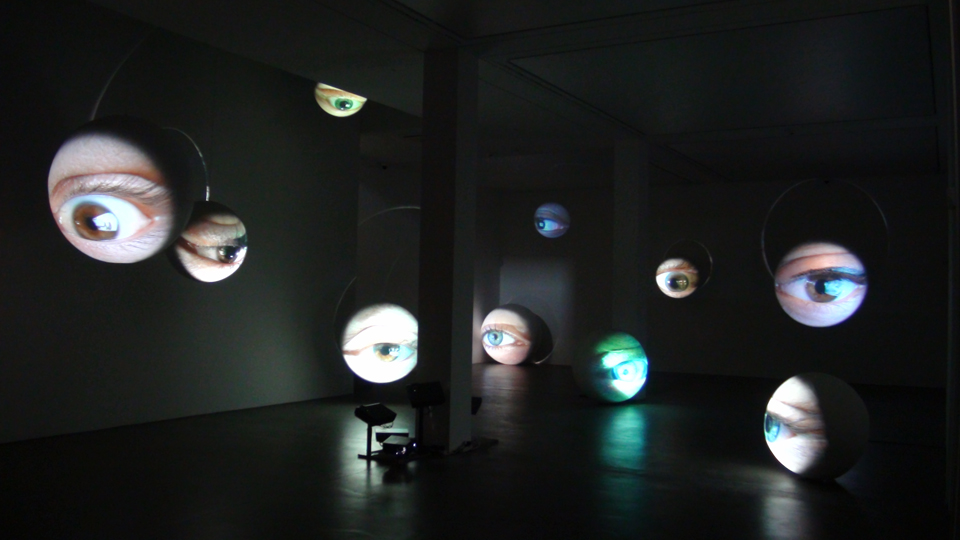


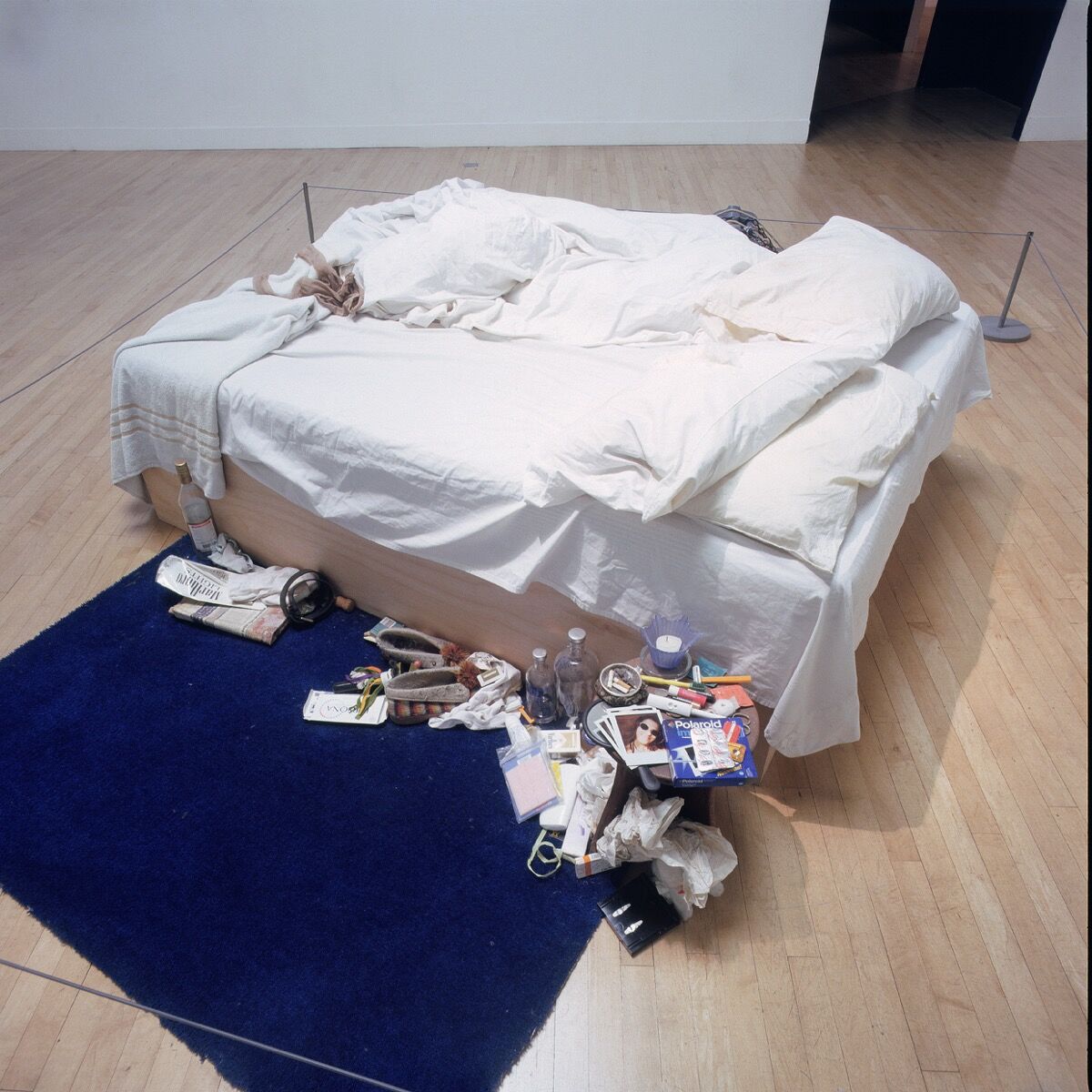


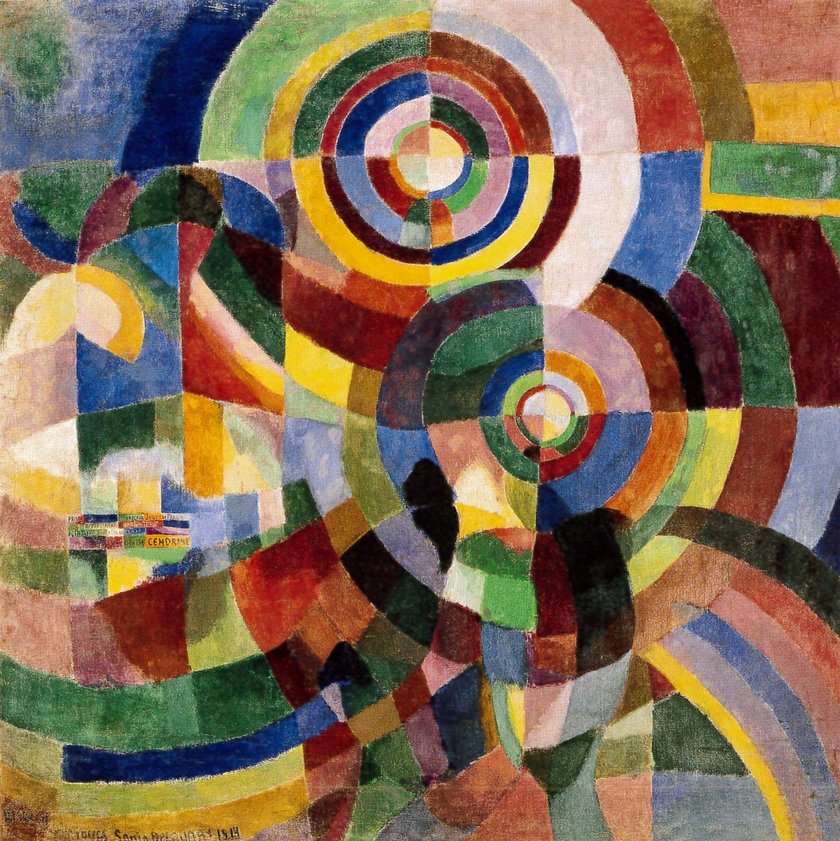

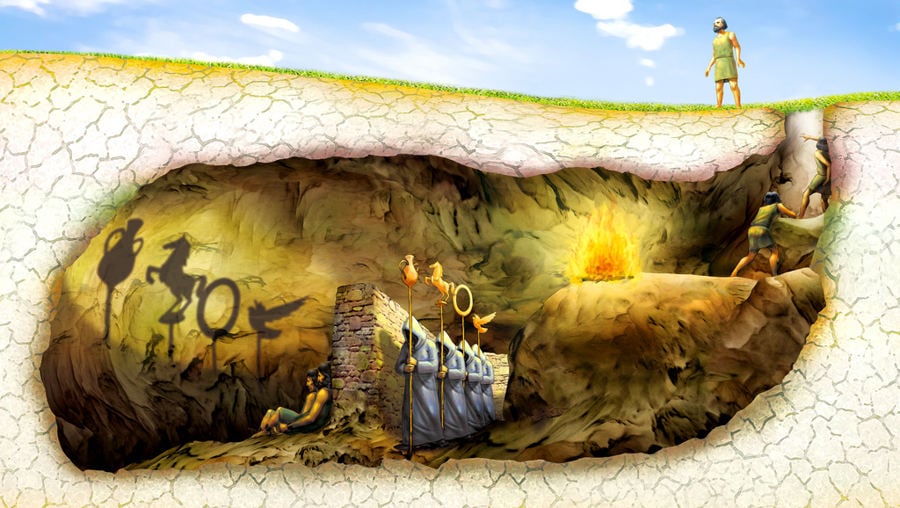


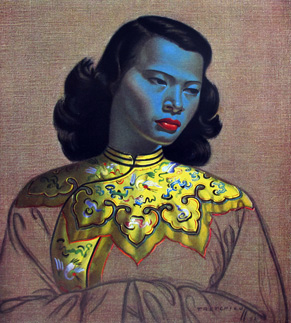
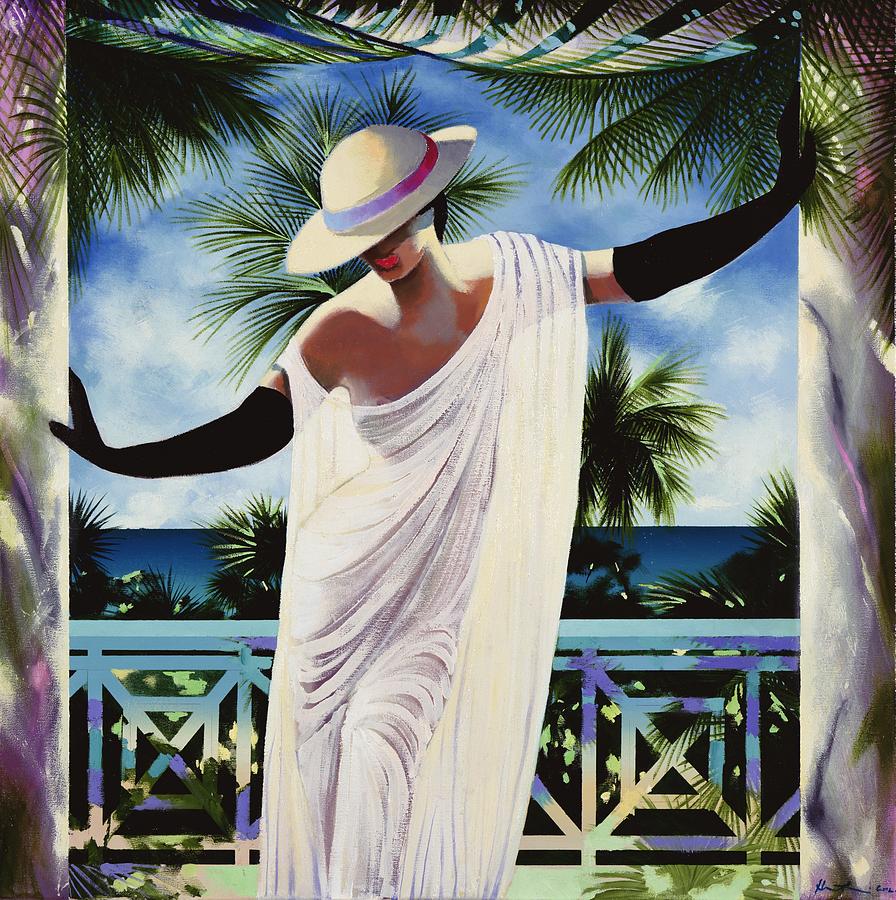


 At
At 

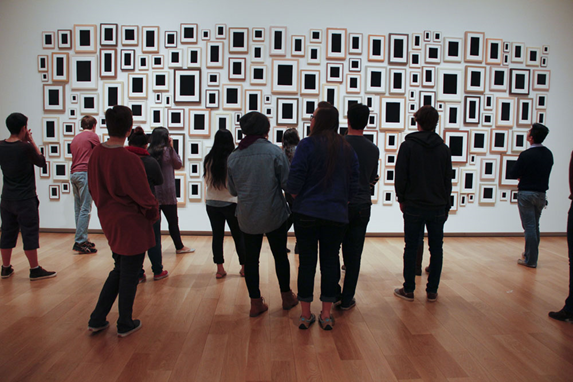
 Lara's Understanding Visual culture (Visual Studies 1) blog