For a picture of your own choice say how the image indicates a point of view for the spectator and say why you think the effect is rare in the cinema but common in photography. Does the painting or photograph represent eye-contact between someone in the picture and ourselves. What films have you seen where characters treat the camera as another person?
Before answering the question above, I wanted to ensure that I fully understood the term ‘scopic regimes’. Formulated by Martin Jay in 1988, the term ‘scopic regime’ is derived from a term used by the cinematologist Christian Metz who wished to compare how we behave in the cinema and in the theatre. According to Sendyka (2013) ‘he is interested in two factors: the distance of the spectator from the object and the very existence of that object vis-à-vis the spectator.’ He refers to visual acts imposed on the viewer, for example the institution, its machinery, its space, its presentation, external perceptual conditions and scopophilia.
Martin Jay developed the idea of Scopic regimes in his 1988 article Scopic regimes and Modernity. Roma Sendyka (2013) explains that:
‘It is therefore not only the act of seeing that is important, but also the system of dependence between the donor and the recipient of the look. The frame of that action also matters: scopic regime is a type of visuality but a ”culturally specific” one. In Jay’s view a scopic regime is a set of visual conventions determining our action of seeing: how and what we see. In other words it is dominant ways of seeing and organising visual culture. In determining the relation between the spectator and the viewed, scopic regimes are the basis of the distinguishing of an object, in this way becoming the basis of the distinction of what is knowable. ‘ (Sendyka,2013:104)
Scopic regimes determine the relation between the spectator and the viewer. Jay argues that vision becomes more dominant in the modern age due to technological advancements (tv, cinema, computers, photography etc. This is modernity’s scopic regime.
I decided to choose a photograph to examine the spectators point of view and found an interesting Paul Strand photo of three children looking through a closed cottage window in the Hebrides during the 1950’s.

This photo indicates the spectator’s point of view very clearly. We (through the photographer’s lens) are placed directly at eye level with the children although we are distinctly separated by the window frame. We are outside whilst the children are peeping through the glass and from behind the curtain to see what is happening. The child in the centre is looking at the camera with confident curiosity, yet the other two look a little uncertain. The photo captures a gentle, homely real life moment in time- one that we can spend time with.
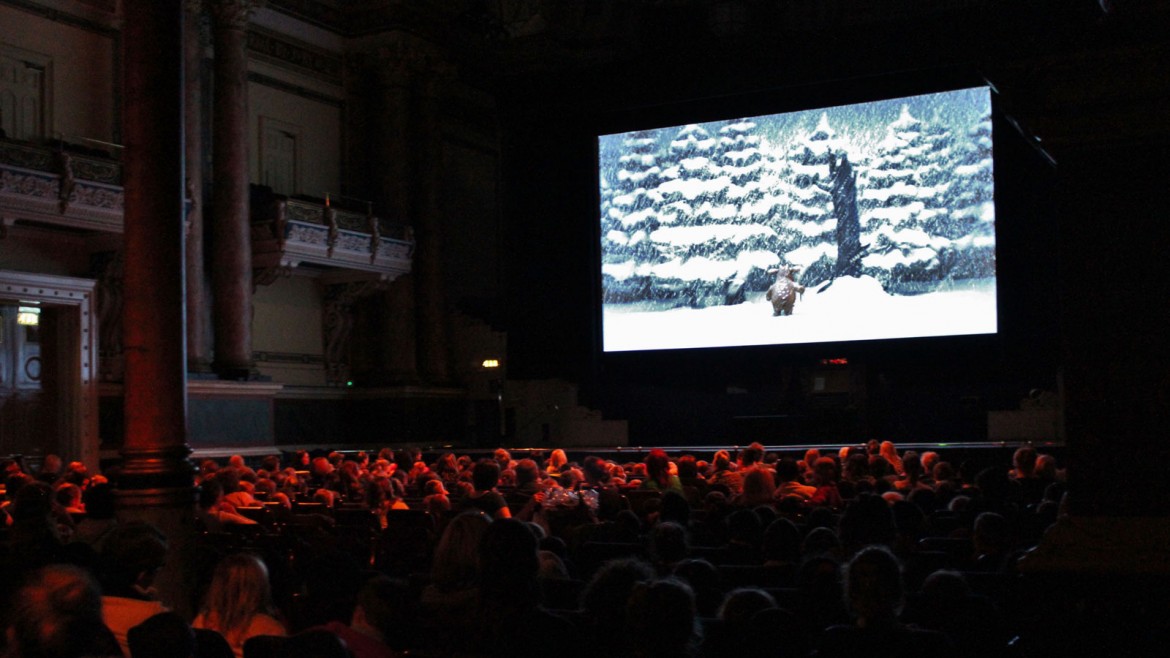
If we compare this to the view point of a spectator of a film in a cinema, it is quite a different experience. The spectator is anonymous and will be sitting in a dark setting amongst many other people. Instead of a static scene with one viewpoint, the spectators viewpoint is constantly changing as the film is edited to keep the viewers attention. Scenes change and viewpoints alter as the cameras move over the film’s duration.
In the Strand photo, the three children are directly making eye-contact with the spectator. This is common in photography because there is often a tendency for people in real life to pose for a photograph by looking down the lens of the camera. In the cinema the characters on the screen do not look directly at the camera/spectator. In film, apart from documentaries, we are observing a narrative played out before us and if the characters were to look at us it would shatter this illusion.
Of course there are exceptions to this rule! There are several films I have seen where the characters treat the camera as another person. This has been termed ‘breaking the fourth wall’. This imaginary wall keeps the actors from the audience. Rodriguez and Strassberg (2014) state that this might be achieved ‘through characters expressing inner thoughts, acknowledging they’re in a film, or venting to the camera (and in turn, the audience)’. This can be seen as an avant-garde technique or done for comedic value.
In the film ‘Ferris Bueller’s day off’ directed by John Hughes, the main character Ferris (played by Matthew Broderick) breaks the fourth wall by regularly speaking to the camera (audience) as if they were one of his friends. Ferris creates an intimacy with the audience as we are pulled out of anonymity and invited into his experience. This enhances the comedic value of the film as we follow his adventure through one day.

The 1947 film ‘Lady in the Lake (dir: robert Montgomery), creates a slightly different experience for the viewer when breaking the fourth wall.

The relationship between the characters and the audience is formed as the audience becomes the Private investigator Phillipe Marlowe (played by the films director). Apart from a couple of times when Marlowe is visible narrating to the audience, the audience see the story played out as though they were Marlowe himself. The other characters address the audience as though they were him by looking directly at the camera.
Reflections
It was interesting to reflect upon contemporary technology and how this effects the point of view for the spectator. Modern society is now dominated by mobile phones and tablets. With the invention of mobile phone camera technology and the ‘selfie’ we see a blurring of subject(object) and viewer as individuals now take on both roles.
List of Illustrations
Fig 1. Strand, P. (1954) Milly, John and Jean MacLellan, South Uist, Hebrides [photograph] At Dickson, A . (2016) The New Yorker : Paul S’s Sense of Things https://www.newyorker.com/culture/photo-booth/paul-strands-sense-of-things Accessed 08/12/2019
Fig 2. Inside the cinema [photograph] At https://www.intofilm.org/films/filmlist/38 Accessed 08/12/2019
Fig 3. Matthew Broderick in Ferris Bueller’s day off (1986) [Film still] At https://www.slashfilm.com/ferris-buellers-day-off-soundtrack/ Accessed 09/12/2019
Fig 4. Lady in the Lake (1947) [film still] At https://worldscinema.org/2012/03/robert-montgomery-lady-in-the-lake-1947/ Accessed 09/12/2019
Bibliography
Dickson, A . (2016) Paul Strand’s Sense of Things : The New Yorker 15/04/2016 https://www.newyorker.com/culture/photo-booth/paul-strands-sense-of-things Accessed 08/12/2019
Rodriguez, B & Strassberg, R. (2014) 14 Films That Famously Break the Fourth Wall in Backstage. 24/04/2014 At https://www.backstage.com/magazine/article/films-famously-break-fourth-wall-12051/ Accessed 09/12/2019
Sendyka, R. (2013) Scopic Regimes and Modernity:Hypotyposis in Koczanowicz D. et al (2013) Discussing Modernity, a dialogue with Martin Jay. Amsterdam:Rodopi At https://www.researchgate.net/publication/334805533_SCOPIC_REGIMES_AND_MODERNITY_HYPOTYPOSIS Accessed 12/12/2019
 Lara's Understanding Visual culture (Visual Studies 1) blog